 English
 Español
Complete Guide to Extension Cords: Types, Standards, and Applications
Content
- 1 Understanding Extension Cord Fundamentals
- 2 Different Types of Extension Cords for Specific Applications
- 3 US Extension Cords: Standards and Specifications
- 4 UK Extension Cords: Standards and Specifications
- 5 EV Extension Cords: Specialized Electric Vehicle Charging Solutions
- 6 Comparative Analysis of Extension Cord Types
- 7 Proper Selection Guide for Extension Cords
- 8 Frequently Asked Questions
- 8.1 What is the maximum safe length for an extension cord?
- 8.2 Can I connect multiple extension cords end to end?
- 8.3 How do I know if an extension cord is damaged?
- 8.4 Are UK extension cords compatible with US appliances?
- 8.5 What does AWG stand for and why does it matter?
- 8.6 Can extension cords be used outdoors in winter?
- 8.7 How much power does a UK extension cord deliver compared to a US cord?
- 8.8 What safety features should an EV extension cord include?
- 8.9 Is it safe to use an extension cord with a space heater?
- 8.10 How often should extension cords be replaced?
Extension cords come in various specifications designed for different electrical needs, power requirements, and geographic regions, with the main distinctions being between US, UK, and specialized EV extension cords, each serving specific voltage standards, safety requirements, and environmental conditions.
Understanding Extension Cord Fundamentals
An extension cord is an electrical cable with a plug on one end and one or more sockets on the other, designed to extend the reach of electrical power from a wall outlet to devices and appliances located at a distance. Extension cords are essential tools in both residential and commercial environments, yet their proper selection and use require understanding several critical factors including wire gauge, voltage rating, amperage capacity, and regional electrical standards.
Wire Gauge and Power Capacity
Wire gauge directly determines the maximum electrical load an extension cord can safely carry. Wire gauge is measured in AWG (American Wire Gauge), where lower numbers indicate thicker wires capable of handling higher currents. A 12 AWG extension cord can safely handle 15 to 16 amperes, while a 14 AWG cord is rated for 13 to 15 amperes, and a 16 AWG cord should not exceed 10 amperes. For devices requiring higher power, such as power tools or space heaters, using a thicker gauge cable prevents voltage drop and reduces fire risk.
The length of the extension cord also impacts its capacity. A 50 foot 12 AWG cord can handle slightly less amperage than a 25 foot cord of the same gauge due to cumulative voltage loss over the longer distance. Manufacturers typically provide amperage ratings at different cord lengths to account for this voltage drop effect.
Voltage Ratings and Safety Standards
Extension cords are rated for specific voltage levels. Standard household extension cords in North America are rated for 125 volts, matching typical wall outlets. Heavy duty extension cords may be rated for 250 volts, allowing them to be used with high powered equipment. Using an extension cord rated for lower voltage than your equipment requires creates serious fire hazards and voids equipment warranties.
All extension cords should carry certifications from recognized testing organizations. In the United States, UL (Underwriters Laboratories) certification is standard. In Canada, CSA (Canadian Standards Association) certification is required. These certifications indicate the cord has been tested and meets safety standards for electrical conductivity, insulation integrity, and fire resistance.
Different Types of Extension Cords for Specific Applications
Indoor Extension Cords
Indoor extension cords are designed for use within homes and offices where they are protected from moisture and extreme temperature fluctuations. These cords typically feature standard plastic insulation and are available in various lengths from 3 feet to 50 feet. Indoor cords are suitable for powering personal computers, printers, lamps, televisions, and other household electronics.
Indoor extension cords should never be used outdoors as the insulation materials degrade when exposed to ultraviolet light, moisture, and temperature variations. Using indoor cords outside significantly increases electrical hazard risk.
Outdoor Extension Cords
Outdoor extension cords use weather resistant insulation materials that can withstand rain, snow, direct sunlight, and temperature extremes. The outer jacket is typically made from rubber or vinyl compounds specifically formulated to remain flexible in cold temperatures and resist cracking in heat.
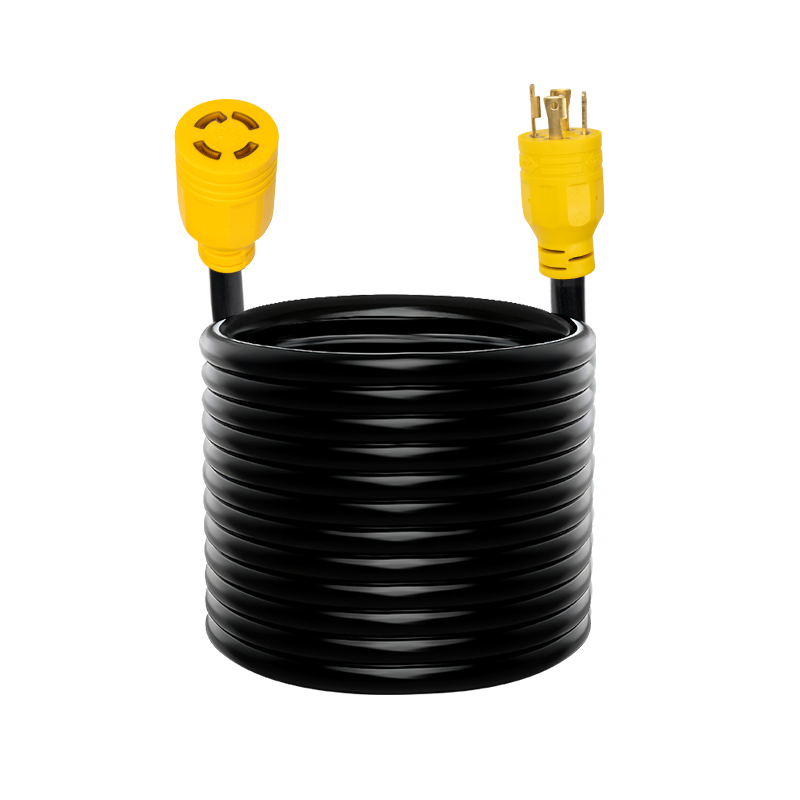
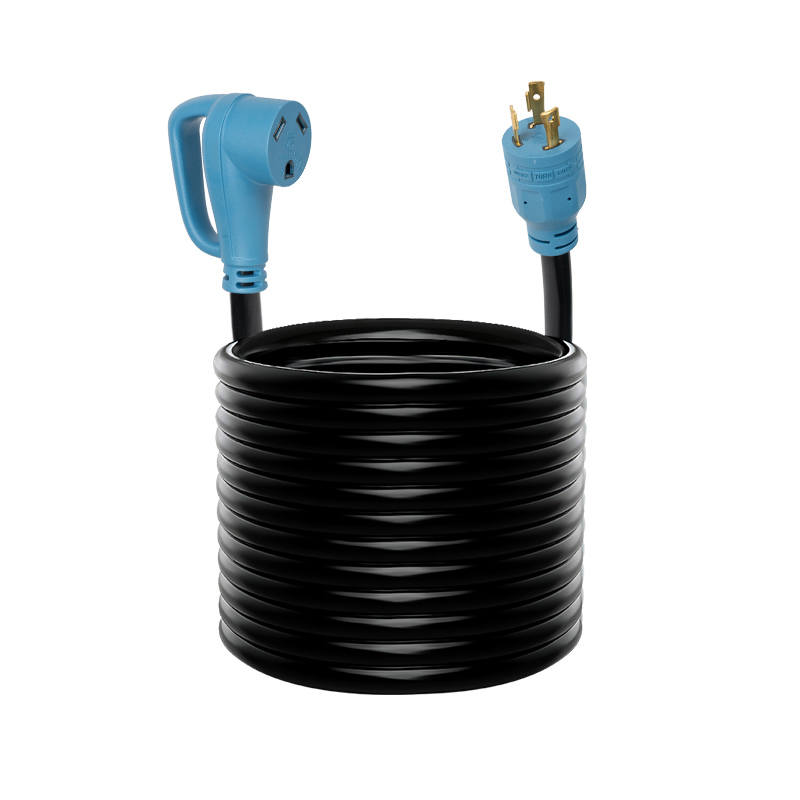
Common outdoor extension cord lengths range from 25 feet to 100 feet, with heavier gauge wires than comparable indoor cords. Outdoor cords often feature three prong grounded plugs and are rated for higher amperage. The bright colors of outdoor cords (orange and yellow are most common) make them more visible, reducing tripping hazards and accidental damage.
Heavy Duty Extension Cords
Heavy duty extension cords are engineered for demanding applications including power tools, construction equipment, and industrial machinery. These cords feature thicker insulation, larger gauge wires (typically 10 AWG or thicker), and more robust connectors. Heavy duty cords can typically handle 15 to 20 amperes continuously, compared to standard cords rated for 10 to 15 amperes.
Lighted ends are sometimes included on heavy duty extension cords, featuring an indicator light that illuminates when power flows through the cord. This feature helps users verify that the circuit is active and aids in quickly identifying power delivery issues.
Retractable Extension Cords
Retractable extension cords offer convenient storage in a compact reel design, automatically winding back into a housing when not in use. These cords typically range from 25 to 50 feet when fully extended. Retractable cords are popular in workshops, garages, and utility areas where space is limited. However, retractable cords may have slightly higher resistance than conventional cords of the same gauge due to the coiled storage configuration.
Triple Outlet Extension Cords
These extension cords feature three power outlets at the end, allowing multiple devices to be powered from a single wall outlet. Triple outlet cords reduce the need for power strips and are available in both indoor and outdoor rated versions. When using triple outlet extension cords, users must ensure the total amperage draw of all connected devices does not exceed the cord's maximum rating.
US Extension Cords: Standards and Specifications
US electrical standards operate on 120/240 volts alternating current with a frequency of 60 Hertz. US extension cords are designed specifically for this voltage and frequency combination.
US Outlet and Plug Configurations
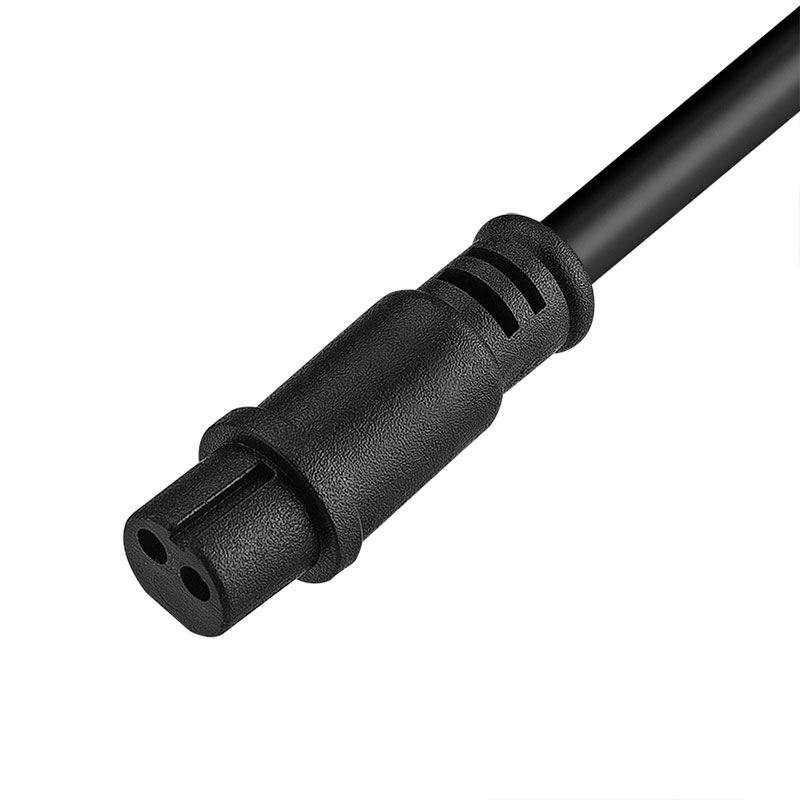
The standard US extension cord features a two prong or three prong plug (NEMA 5-15P configuration). Two prong plugs are used for non grounded appliances like lamps and small electronics, while three prong grounded plugs provide additional electrical safety for high powered tools and appliances. The female outlets accept these standard US plugs.
NEMA 5-15R rated outlets and plugs represent the most common residential electrical interface in the United States, found in virtually every home and office building.
US Safety Requirements
The National Electrical Code (NEC) establishes requirements for extension cord use throughout the United States. Key safety guidelines include:
- Extension cords should not be used as permanent wiring installations
- Outdoor rated extension cords must be used for exterior applications
- Damaged or frayed cords must be immediately replaced
- Extension cords should not be connected end to end to create longer lengths
- Cords should not be run through walls, doorways, or under carpeting
US Extension Cord Gauge Selection
For household US extension cords, wire gauge selection depends on both the required amperage and cord length. For a 50 foot cord powering a 15 ampere device, 12 AWG gauge wire is recommended. For shorter distances under 50 feet with 10 ampere or lower draw, 14 AWG is acceptable. For high power applications requiring 20 amperes, 10 AWG wire is necessary.
| Cord Length | 10 Amp Load | 15 Amp Load | 20 Amp Load |
|---|---|---|---|
| Up to 50 feet | 14 AWG | 12 AWG | 10 AWG |
| 51 to 100 feet | 12 AWG | 10 AWG | 8 AWG |
| 101 to 150 feet | 10 AWG | 8 AWG | 6 AWG |
UK Extension Cords: Standards and Specifications
The United Kingdom uses 230 volts alternating current at 50 Hertz frequency. UK extension cords are manufactured to accommodate these specifications and differ significantly from US extension cords in plug design, outlet configuration, and electrical characteristics.
UK Outlet and Plug Configurations
UK extension cords utilize the BS 1363 rectangular three rectangular pin plug design, distinctly different from the angled two or three prong US configuration. The BS 1363 plug features two vertical rectangular pins for live and neutral connections, plus a round grounding pin located above them. Female outlets accept only these specific UK plugs, making it impossible to accidentally use US cords in UK applications.
The rectangular design of UK plugs provides better contact stability compared to round pins, resulting in more reliable electrical connections. The distance between the pins on UK plugs is standardized at 19.05 mm.
UK Safety Requirements
UK electrical safety is governed by the Electrical Equipment (Safety) Regulations 2016 and British Standards. Key requirements include:
- All UK extension cords must have a protective shutter over the socket openings to prevent accidental contact
- Extension cords must carry CE marking indicating compliance with European electrical safety directives
- Surge protection features are commonly integrated into UK extension cords
- All outlets must include an integrated fuse that protects individual sockets
- Extension cords must meet strict flammability standards for the outer jacket material
UK Extension Cord Power Ratings
UK extension cords are typically rated for 10 amps, 13 amps, or 16 amps depending on the type and intended application. The most common household rating is 13 amps, providing approximately 3000 watts of power capacity at 230 volts. This higher voltage compared to US standards allows UK extension cords to carry more total power with the same amperage rating.
A 13 amp UK extension cord delivers approximately 3000 watts of power, whereas a 15 amp US extension cord at 120 volts delivers only 1800 watts. This efficiency advantage comes from the higher voltage standard used in the UK.
UK extension cords for outdoor use must be rated for higher moisture resistance and feature more robust outer jackets than US outdoor cords. Industrial strength UK extension cords are frequently used in construction, automotive, and manufacturing applications throughout Europe, Asia, and Africa.
EV Extension Cords: Specialized Electric Vehicle Charging Solutions
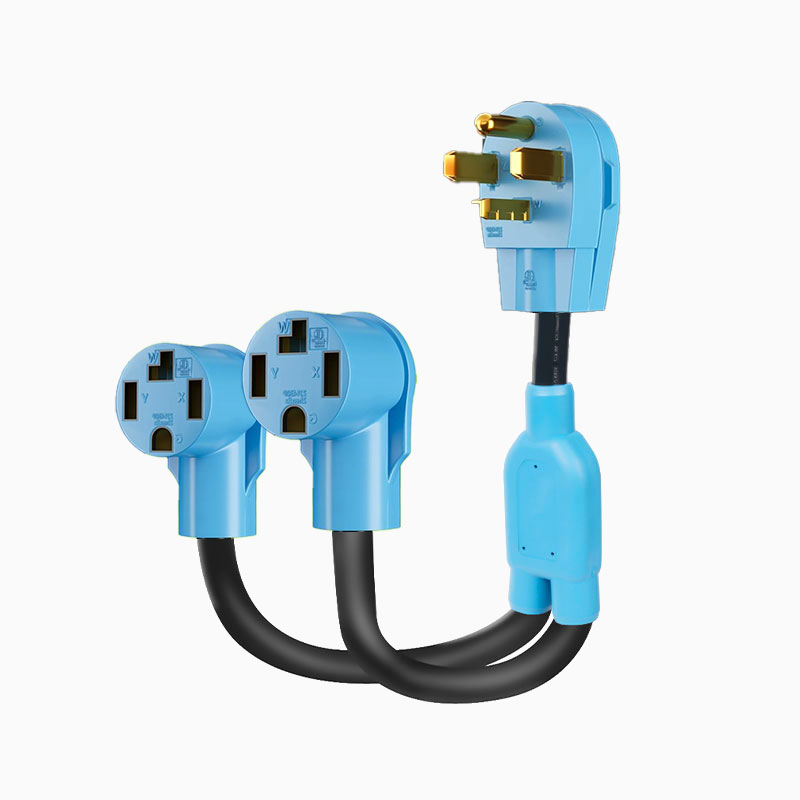
Electric vehicle extension cords represent a specialized category of power distribution cables designed specifically for EV charging applications. EV extension cords serve to bridge the distance between a vehicle's charging inlet and the power source.
Types of EV Extension Cords
Level 1 EV extension cords work with standard household 120 volt outlets, providing approximately 1.4 kilowatts of charging power. These cords are useful for emergency charging situations but require approximately 24 to 48 hours to fully charge most electric vehicle batteries.
Level 2 EV extension cords operate at 240 volts and deliver 5.8 to 19.2 kilowatts of charging power depending on the specific cord configuration. Level 2 extension cords are designed for home and commercial charging stations, providing significantly faster charging than Level 1 options. Typical Level 2 extension cords measure between 18 and 25 feet in length.
Level 3 DC fast charging extension cords operate at 400 volts or higher direct current voltage and are typically hardwired to charging stations rather than equipped with standard plugs. These professional grade cables are not meant for consumer extension use and require specialized installation by licensed electricians.
EV Extension Cord Safety Features
EV charging extension cords incorporate several critical safety features that distinguish them from standard extension cords. Temperature monitoring sensors automatically stop charging if the cable temperature exceeds safe limits. Ground fault circuit interruption (GFCI) protection prevents dangerous electrical faults from occurring during the charging process.
Connector designs for EV extension cords feature weatherproof seals and corrosion resistant materials to withstand outdoor exposure. The SAE J1772 connector standard used in North America ensures compatibility between different EV models and charging infrastructure. IEC 62196 Type 2 connectors are standard in Europe and Asia, reflecting the regional voltage and frequency standards.
EV Extension Cord Gauge Requirements
EV charging cables require heavier gauge wire than standard household extension cords due to the sustained high current draw involved in battery charging. A typical Level 2 EV extension cord features 6 AWG or 8 AWG copper wire rated for continuous current carry. The maximum recommended length for a Level 2 EV extension cord is 25 feet, beyond which voltage drop becomes problematic for charging efficiency.
Using undersized EV extension cords can result in charging times extending beyond 10 hours for a full battery charge, compared to the standard 4 to 8 hour charging time with properly sized cables.
EV Extension Cord Voltage Drop Considerations
Voltage drop in EV extension cords directly impacts charging speed and battery longevity. When voltage drops below the charger's minimum operating threshold, the charging process either slows dramatically or stops entirely. For a 240 volt Level 2 charger, voltage drop should not exceed 3 percent, which means a 7.2 volt maximum drop on a 240 volt circuit.
Calculating voltage drop requires considering both the cable length and the gauge. A 25 foot Level 2 EV extension cord with 6 AWG wire has approximately 1.8 percent voltage drop under typical charging conditions, remaining within safe operating parameters.
Comparative Analysis of Extension Cord Types
Power Delivery Comparison
Standard US household extension cords deliver approximately 1800 watts at maximum capacity (15 amps x 120 volts). UK household extension cords deliver approximately 3000 watts at maximum capacity (13 amps x 230 volts). EV Level 2 charging extension cords deliver 5800 to 19200 watts depending on the specific amperage rating and vehicle charger configuration.
The higher power delivery capacity of UK and EV extension cords reflects the different electrical standards and specialized applications these cables serve. When selecting an extension cord for any application, users must verify that the cord's maximum power rating exceeds the total power consumption of all connected devices.
Durability and Environmental Resistance
Outdoor extension cords designed for harsh environments feature reinforced insulation materials that resist ultraviolet damage, temperature extremes, and moisture infiltration. Premium outdoor extension cords utilize vinyl or rubber compounds formulated to remain flexible at temperatures as low as negative 20 degrees Celsius and maintain structural integrity in temperatures exceeding 50 degrees Celsius.
EV extension cords require enhanced durability standards due to the outdoor environments where they are frequently stored and used. Weather resistant connectors incorporate stainless steel and corrosion resistant alloys to ensure long term reliability.
Connector Design Differences
The physical design differences between US, UK, and EV connectors prevent accidental mismatches. A US plug cannot fit into a UK outlet, and EV charging connectors are completely incompatible with standard extension cord receptacles. These design barriers enhance electrical safety by preventing users from attempting to charge vehicles or operate devices with inappropriate voltage and current specifications.
Cost Comparisons
Standard US extension cords range in price from approximately 5 dollars for basic 25 foot models to 40 dollars for premium 100 foot outdoor heavy duty cords. UK extension cords typically cost slightly more due to additional safety features and more complex connector designs, ranging from 8 dollars to 50 dollars depending on length and specification.
EV extension cords represent a higher investment, with Level 2 extension cords ranging from 300 to 800 dollars depending on the cable length, connector type, and manufacturer. The higher cost reflects the specialized engineering, enhanced safety systems, and durable materials required for EV charging applications.
Proper Selection Guide for Extension Cords
Assessing Power Requirements
Begin by determining the maximum wattage of devices that will be powered through the extension cord. Add the wattages of all devices that might operate simultaneously. For example, if you plan to connect a 1200 watt space heater and a 300 watt lamp, you need a total capacity of at least 1500 watts.
Convert wattage to amperage using the formula: Amperage equals Watts divided by Voltage. For a 1500 watt device in a 120 volt system, the amperage requirement is 12.5 amps, meaning a minimum 15 amp rated extension cord is necessary. In a 230 volt system like the UK, the same 1500 watt device requires only 6.5 amps.
Determining Appropriate Cord Length
Longer extension cords experience greater voltage drop, reducing the available power at the load end. When possible, use the shortest extension cord that reaches your device. If longer lengths are necessary, use a heavier gauge wire to compensate for the voltage drop effect.
For outdoor applications, err on the side of heavier gauge wire than indoor applications. An outdoor 100 foot extension cord should use at least 12 AWG wire, while an indoor cord of the same length can function adequately with 14 AWG wire if the current draw is light.
Environmental Considerations
Select outdoor rated extension cords for any application outside buildings, including covered patios, garages, and sheds where temperature and humidity fluctuate. Never use indoor cords outdoors, as this creates serious electrical hazards.
For wet environments like bathrooms or kitchens, use GFCI protected extension cords that interrupt power if moisture or ground faults are detected. GFCI protection is mandatory for all bathroom and kitchen outlet requirements in both US and UK electrical codes.
Vehicle Charging Considerations
If selecting an EV extension cord, verify compatibility with your specific vehicle model and charging station. SAE J1772 connectors work with most North American vehicles, while IEC 62196 Type 2 connectors are standard in Europe. Verify the maximum amperage rating of both your charging station and extension cord, using the lower of the two values for safe operation.
For Level 2 charging, do not exceed 25 feet of extension cord length without consulting a licensed electrician regarding appropriate gauge sizing. Longer extension runs require heavier gauge wire that may not fit standard charging connectors.
Frequently Asked Questions
What is the maximum safe length for an extension cord?
The maximum safe length depends on the wire gauge and current draw. For a 15 amp device, 150 feet of 12 AWG wire is maximum, while 14 AWG wire should not exceed 50 feet. For lower amperage devices under 10 amps, 14 AWG wire can extend to 100 feet. Always refer to manufacturer specifications for your specific cord.
Can I connect multiple extension cords end to end?
No, connecting multiple extension cords is dangerous and violates electrical codes. Connecting cords end to end creates weak connection points prone to arcing and fire. If you need greater reach, purchase a single longer extension cord of appropriate gauge.
How do I know if an extension cord is damaged?
Inspect cords regularly for visible damage including cracks, burns, exposed wiring, or cuts in the insulation. Feel the cord for warm spots while it is in use, which indicate internal wire damage or corrosion. Damaged cords must be immediately discarded and replaced.
Are UK extension cords compatible with US appliances?
Not without an adapter. UK plugs do not fit US outlets and vice versa. Additionally, using a UK appliance in the US without a voltage converter can damage the device since it is designed for 230 volts, not 120 volts.
What does AWG stand for and why does it matter?
AWG stands for American Wire Gauge, which measures wire thickness. Lower AWG numbers indicate thicker wires that safely carry higher current. Selecting the appropriate AWG for your application prevents overheating and fire hazards.
Can extension cords be used outdoors in winter?
Yes, if they are specifically rated for outdoor use. Outdoor extension cords use cold resistant insulation materials. However, indoor cords become brittle in freezing temperatures and pose serious shock hazards if the insulation cracks.
How much power does a UK extension cord deliver compared to a US cord?
A UK 13 amp extension cord at 230 volts delivers approximately 3000 watts, while a US 15 amp cord at 120 volts delivers approximately 1800 watts. The higher UK voltage allows greater power delivery at similar amperage ratings.
What safety features should an EV extension cord include?
A quality EV extension cord should include temperature monitoring, ground fault protection, weather resistant connectors, and SAE J1772 or IEC 62196 Type 2 compatibility. The cable should be clearly labeled with voltage, amperage, and connector type specifications.
Is it safe to use an extension cord with a space heater?
Only if the extension cord is rated for the space heater's wattage consumption. Most space heaters draw 10 to 15 amps, requiring a 12 AWG cord at minimum. Never use extension cords longer than 50 feet with space heaters, as voltage drop can cause insufficient heating and fire hazards.
How often should extension cords be replaced?
Extension cords should be replaced when any visible damage is observed, when the cord fails to power devices adequately, or when warm spots develop during use. Heavy use extension cords may require replacement every 2 to 3 years, while storage room cords may last much longer.
- [email protected]
- +(86)-0574-62162605
- +(86)-137 0584 5290
- No. 5-2, Yaobei Avenue, Simen Town, Yuyao City, Ningbo, Zhejiang Province, China
Copyright © NINGBO ZHENJIA ELECTRIC APPLIANCES CO.,LTD. All Rights Reserved. Custom Temporary String Light Manufacturers
