 English
 Español

RV Adaptor Manufacturers


Core Products & Expertise: EV Charging Solutions: J1772 Type 1 & Type 2 connectors, GB/T AC/DC charging cables, Electric Vehicle (EV) AC/DC charging connectors ("guns"),
and EV chargers.
Power Cords & Adapters: c(Ul)us-certified power cords, RV adapters, and various plugs/sockets.
Lighting Components: Temporary string lights and string light sockets/wiring.
Commitment to Excellence:
Professional R&D: Backed by a dedicated in-house R&D team driving innovation.
Robust Quality Assurance: Certified under ISO 9001 Quality Management System. Products hold key safety certifications, including c(Ul)us, ETL, and CE.
Advanced Manufacturing: Equipped with modern production facilities and stringent quality control processes.
Global Reach & Reputation:
Over the past decade, Zhenjia has achieved steady growth and earned recognition as a reputable enterprise within the industry. Our products are exported worldwide, with a
strong presence in demanding markets such as the United States.
Our Mission:
As China RV Adapter Cord Manufacturers and RV Electrical Adapter Factory, we are committed to providing our global customers with reliable, safe, and high-performance products, supported by exceptional service. We strive to build lasting partnerships through continuous innovation and unwavering dedication to quality.
Looking Ahead:
Zhenjia Electric remains focused on advancing technology, enhancing manufacturing capabilities, and expanding our global footprint to meet the evolving needs of the market.
Certificate
-
 Certificate Of Compliance E529560
-
 Certificate Of Compliance E325763
-
 Certificate Of Compliance E321611
-
 Verification Of Compliance
-
 Verification Of Compliance
-
 Authorization To Mark
Factory
-
 Factory Equipment
-
 Factory Equipment
-
 Factory Equipment
-
 Factory Equipment
-
 Warehouse
-
 Warehouse
-
 Warehouse
-
 Work Shop
-
Imagine receiving a pallet of 500 LED work lights for a new logistics center, only to find that the daisy-chain connectors are rated for dry locations, the lead-in cords cannot reach the overhead busway, and the plugs are built for a 230V European system whil...
 VIEW MORE
2026.10.22
-
A container of 300 festoon sets arrives in Ohio, and every third unit fails the pull test on its molded plug. The lamps are fine. The sockets are fine. The conductor inside the plug is a thin strand that was never meant to carry the load across a 24-foot run,... VIEW MORE
2026.10.15
-
A distributor sends an RFQ for 5,000 RV adaptor cords: NEMA TT-30P male to 5-15R female, 12 inches, 10 AWG, retail bag. Three factories in Ningbo quote within eight percent of one another, and the samples look identical — same body, same color, same print. Th... VIEW MORE
2026.10.08
Contact Us
RV Adaptor
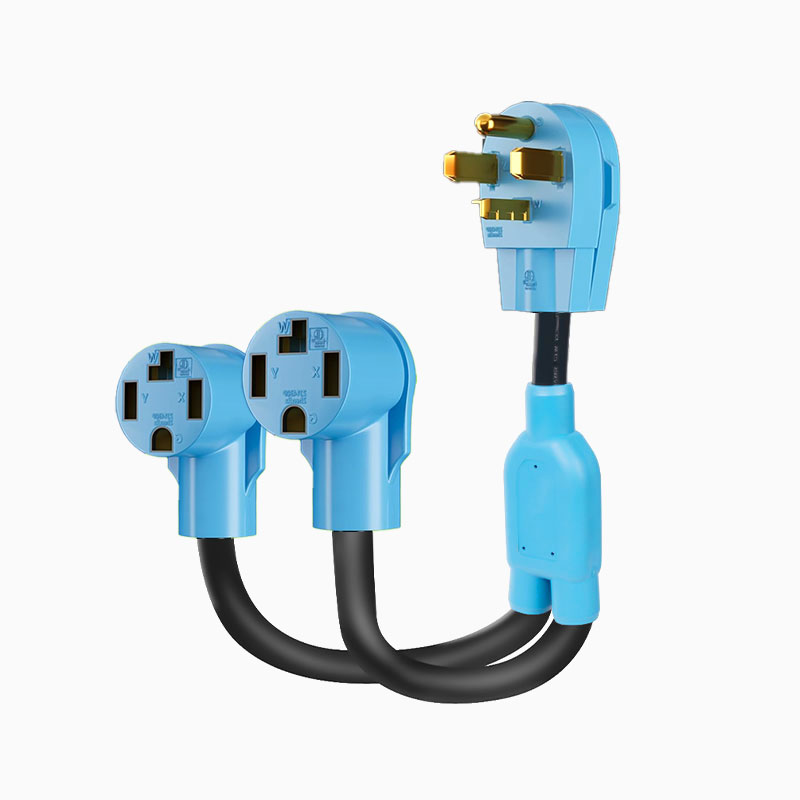
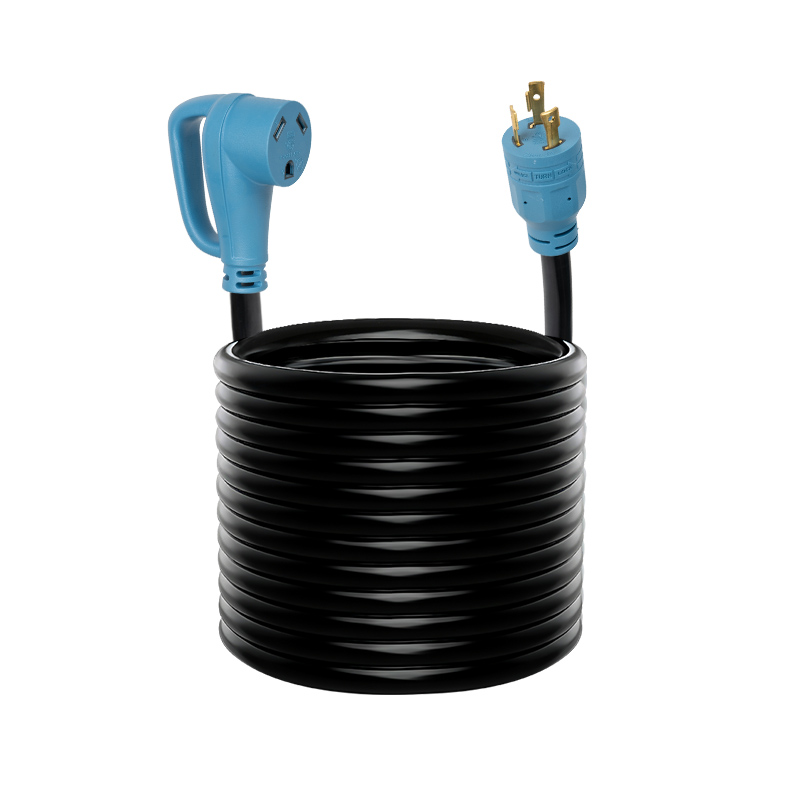
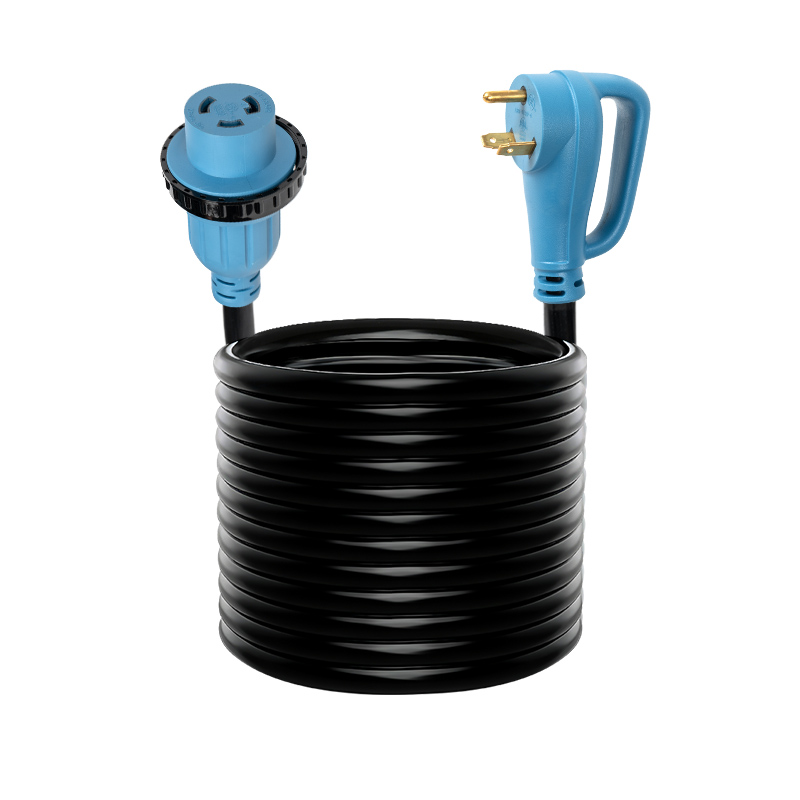
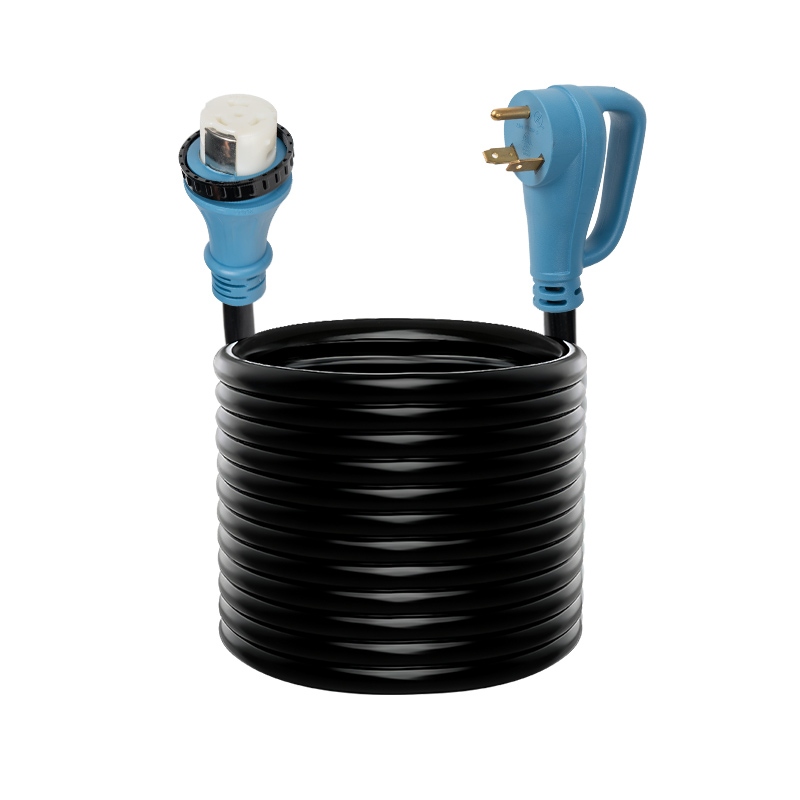
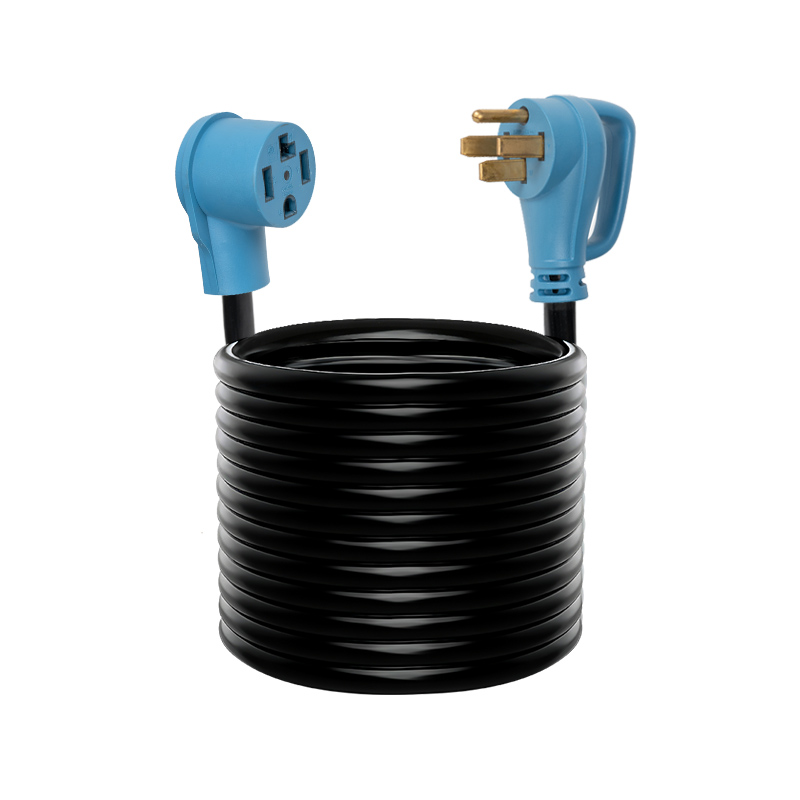
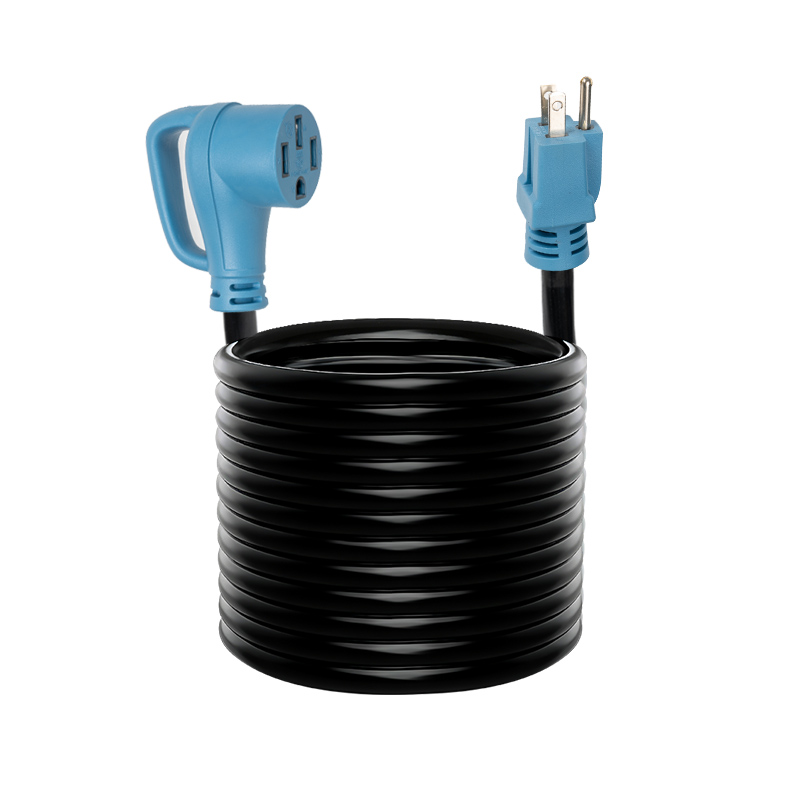
Ningbo Zhenjia Electric Appliances Co., Ltd. is a China RV Adaptor manufacturer producing NEMA-configuration adapter cords and Y splitters for recreational vehicles, campground shore power, portable generators, dryer outlets and Level 2 EV charging. Since 2006 we have built power cords, adapters and charging assemblies in our own plants, with an overseas manufacturing base of 35,000 m² supporting the same production standards as our Ningbo operation.
Our RV Adaptor range covers dog-bone converters, Y splitter adapter cords and locking adapters in 30 A and 50 A classes, supplied with ETL, c(UL)us and CE certification routes depending on the configuration.
What We Manufacture in the RV Adaptor Range
RV adapters solve a specific problem: the plug on the vehicle or appliance rarely matches the receptacle at the pedestal, generator or wall outlet. We build the conversion into a molded assembly rather than a loose plug-and-socket set, so the current path, strain relief and outdoor jacket are controlled as one part. Every adapter is assembled from stranded copper conductors, molded or assembled connectors, and a heavy-duty jacket selected for the working environment.
The range is organized by the two variables that matter on site — the NEMA configuration at each end and the current class. Standard builds run from 15 A through 50 A, with 10 AWG and 10/3 AWG constructions used where the product page specifies them. Lengths are short by design, typically 2 ft to 3 ft, because an adapter is a transition piece, not an extension cord.
Range at a Glance
| Adapter Family | Configuration | Typical Application |
|---|---|---|
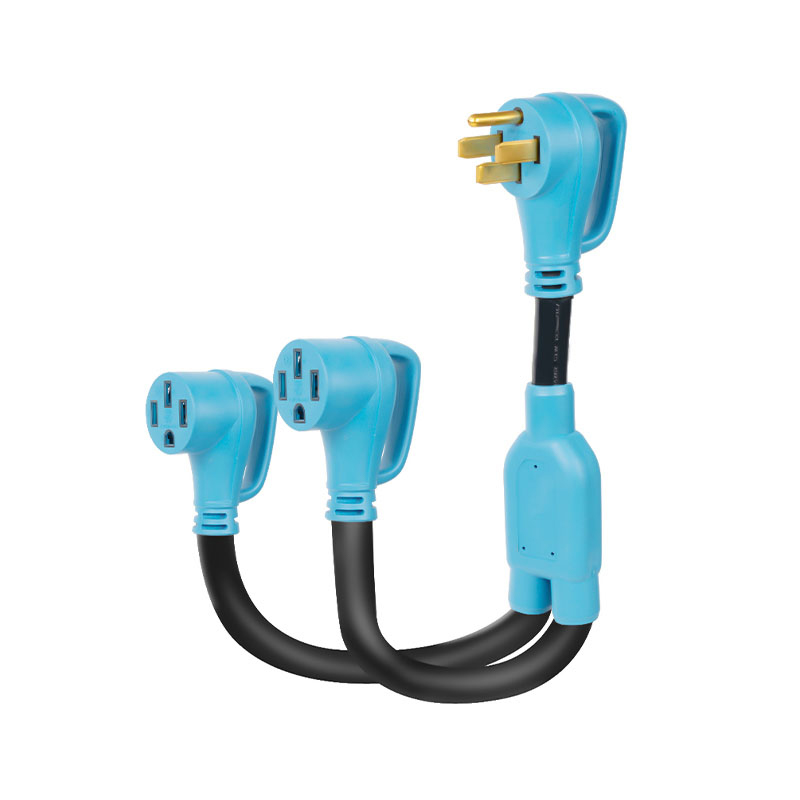
| 50 A Y splitter | NEMA 14-50P to 2× NEMA 14-50R | Sharing one campground 14-50 outlet between RV and EV |
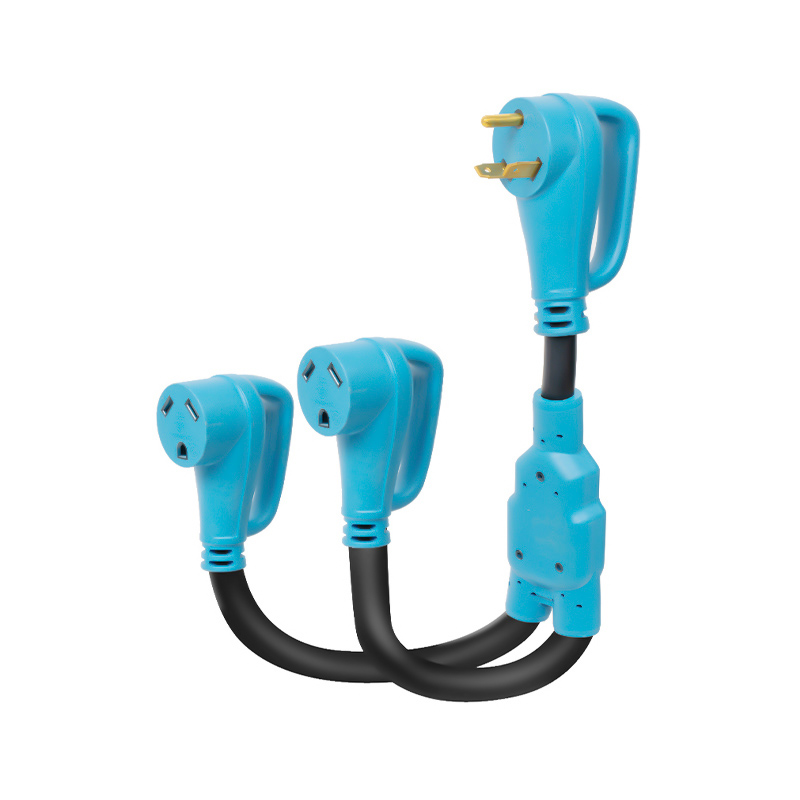
| 30 A Y splitter | NEMA TT-30P to 2× NEMA TT-30R | Two 30 A RV loads from one TT-30 pedestal |
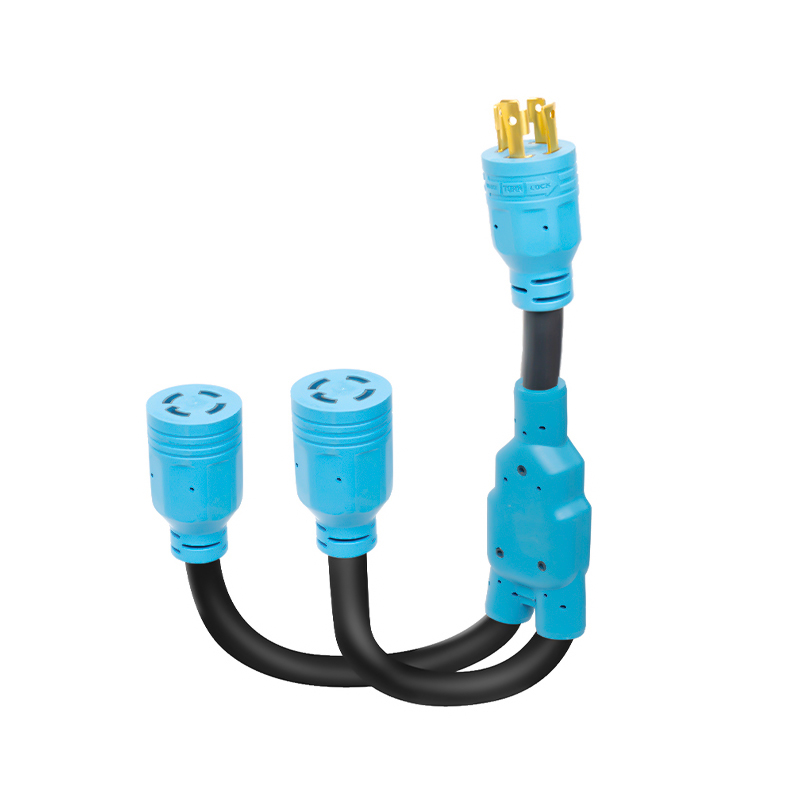
| Generator locking splitter | NEMA L14-30P to 2× L14-30R, 10/3 AWG SJTW | Job sites, home backup, RV feed from a 30 A generator |
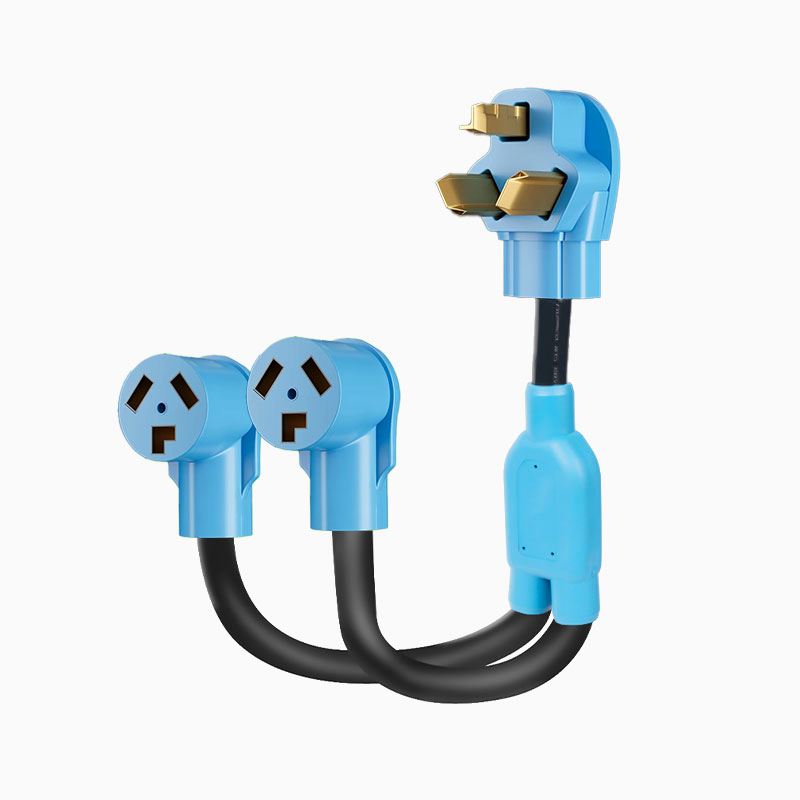
| Dryer / EV splitter | NEMA 10-30P or 14-30P to 2× matching R | Level 2 EV charging from an existing dryer outlet |
| Dog-bone converter | NEMA 14-50P to L5-30R; TT-30P to SS2-50R | Matching a 50 A pedestal to a 30 A trailer inlet |
| Generator-to-RV adapter | NEMA L5-30P to NEMA TT-30R, with handle | Feeding a 30 A RV inlet from a portable generator |
| Welder / EV converter | NEMA 6-50P to NEMA 14-50R | Using a 6-50 welder receptacle for EV charging |
| Step-down adapter | NEMA 5-15P to 14-50R; TT-30P to 5-15R | Low-demand loads, maintenance and test connections |
Application Fit Across RV, Generator and EV Duty
Campground pedestals in North America are dominated by NEMA 14-50 and TT-30 receptacles, while trailers and motorhomes carry 30 A or 50 A inlets. The mismatch is normal, and the adapter is what keeps the vehicle powered without rewiring the site. The same logic applies at home: a 14-30 or 10-30 dryer receptacle is often the only 240 V source available for Level 2 charging, and a splitter lets the dryer and the vehicle share it without a second circuit.
Generator duty adds a different requirement. Twist-lock connectors such as L14-30 and L5-30 resist vibration and pull-out, which is why our generator splitter and generator-to-RV adapters use locking interfaces on the generator side. Where the run is exposed to weather, we specify SJTW or STW jackets with flame-retardant and UV-resistant compounds.
Where Each Build Fits
- RV parks and rental fleets: 14-50 and TT-30 Y splitters reduce pedestal congestion and let two vehicles share one outlet.
- Home EV charging: dryer-outlet splitters convert an existing 10-30 or 14-30 circuit into a charging point.
- Job sites and backup power: L14-30 locking splitters distribute a 30 A generator feed to two loads.
- Dealers and distributors: a compact adapter assortment covers the most common conversion requests with fewer SKUs.
Conductors, Jackets and Connector Construction
Conductor size drives both safety and temperature rise. Our 30 A builds use 10 AWG stranded copper, and the L14-30 generator splitter uses 10/3 AWG SJTW. The 14-50 Y splitter is built on 10-gauge stranded copper with a rugged STW jacket. Pure copper conductors keep voltage drop low over the short adapter length, and the stranded construction maintains flexibility at the connector transition where solid wire would fatigue.
Outer jackets are selected for the application: heavy-duty PVC with flame-retardant and heat-resistant properties for general use, and weather-resistant compounds for outdoor and campground duty. Molded strain relief at each end protects the conductor-to-terminal joint, which is the failure point in field-damaged adapters.
Specification Points We Confirm
- Male and female NEMA configuration at each end, including locking versus straight-blade
- Current rating and voltage class — 15 A, 30 A or 50 A; 125 V, 250 V or 125/250 V
- Conductor gauge and stranding, and whether a ground conductor is required
- Jacket type and temperature rating, plus UV and flame-retardant requirements
- Overall length, typically 2 ft to 3 ft for adapter duty
- Handle, grip or ergonomic features for frequent connect and disconnect
Certification and Quality Control
Our production operates under an ISO 9001 quality management system, and our adapter cords are built to certification routes including ETL, c(UL)us and CE depending on the target market. Certificate of compliance records E529560, E325763 and E321611 are maintained for the applicable product families. We test in our own laboratory, and incoming conductor, molded assembly and finished-goods checks are carried out before packing.
For projects that require documented acceptance, we can align the inspection plan with the certification route and provide the compliance records that apply to the ordered configuration. Where a customer needs a specific listing mark on the label, that requirement is confirmed at quotation stage so the correct production route is used.
OEM/ODM Customization and Related Product Lines
We develop and produce adapters from customer drawings or samples. Customization typically covers connector type and brand, cable gauge, jacket color and print, overall length, labeling and retail packaging. Because we operate our own granulation and processing plant, compound and jacket specifications can be matched to the application rather than limited to a catalog standard.
RV adapters sit alongside our other power connection lines, and many projects combine them. Our Extension Cord range covers longer runs, while Generator Power Cords & Accessories supplies the inlet boxes, twist-lock plugs and wiring cable that complete a generator connection. For charging projects, our EV Charger line covers the equipment side of the same installation.
Installation, Use and Maintenance Notes
An adapter is a temporary or semi-permanent transition, not a substitute for a correctly rated circuit. The receptacle, breaker and vehicle inlet must be able to carry the load the adapter passes. We mark each assembly with its rating so the current class is visible at the point of use, and we recommend that splitter users manage total connected load rather than assuming the outlet can supply both branches at full current simultaneously.
In service, the wear points are the connector contacts and the strain relief. Visual inspection for jacket damage, heat discoloration or loose fit should be part of routine equipment checks. Replacement adapters are supplied as individual units, and spare-part and packaging scope is agreed per order.
Information We Use to Configure Your Solution
To quote an RV adapter accurately we need the electrical and physical facts of the installation, not a general description. The list below is what our engineering and sales team works from when preparing a configuration and price.
| Project Input | What It Determines |
|---|---|
| Source and destination NEMA configuration | Connector tooling and molded assembly design |
| Current, voltage and total load | Conductor gauge and connector rating |
| Indoor, outdoor or wet location | Jacket compound, UV and weather resistance |
| Target market and required listing | ETL, c(UL)us or CE production route |
| Length, color and labeling | Cut length, jacket color and print |
| Packaging and order quantity | Retail or bulk packing and delivery scope |
Frequently Asked Questions
Can one adapter feed an RV and an EV at the same time?
Yes, with load management. A 14-50 Y splitter such as our NEMA 14-50P to 2× 14-50R build is designed for that scenario, but the two connected loads share the circuit capacity. The vehicle charging current should be set so the combined draw stays within the outlet and breaker rating.
What wire gauge do you use for 30 A and 50 A adapters?
Our 30 A builds use 10 AWG stranded copper, and the L14-30 generator splitter uses 10/3 AWG SJTW. The 14-50 Y splitter uses 10-gauge stranded copper with an STW jacket. Gauge is confirmed against the current rating and length for each configuration.
Are the adapters suitable for outdoor campground use?
Outdoor builds use heavy-duty jackets with flame-retardant, heat-resistant and UV-resistant properties, and weather-resistant connector designs. The specific jacket compound is selected according to whether the adapter is used indoors, outdoors or in a wet location.
Which certifications apply to your RV adapter cords?
Depending on configuration and target market, our adapter cords are produced to ETL, c(UL)us or CE routes, under an ISO 9001 quality management system. The applicable listing is confirmed when the order configuration is set.
Can you produce a custom NEMA combination or length?
Yes. We develop and produce from customer drawings or samples, covering connector type, cable gauge, jacket color and print, length, labeling and packaging. Send the source and destination configurations, current class and environment, and we will confirm the build.
Do you supply matching generator and extension products?
We do. Generator inlet boxes, twist-lock plugs and generator wiring cable are available in the same program, and extension cords cover longer runs. Combining these lines on one order keeps connector families and jacket specifications consistent across an installation.
- [email protected]
- +(86)-0574-62162605
- +(86)-137 0584 5290
- No. 5-2, Yaobei Avenue, Simen Town, Yuyao City, Ningbo, Zhejiang Province, China
Copyright © NINGBO ZHENJIA ELECTRIC APPLIANCES CO.,LTD. All Rights Reserved. OEM/ODM RV Adaptor Manufacturers
