 English
 Español

How to Specify Custom LED Work Lights: Environment, Wattage, and Safety Standards
Content
Imagine receiving a pallet of 500 LED work lights for a new logistics center, only to find that the daisy-chain connectors are rated for dry locations, the lead-in cords cannot reach the overhead busway, and the plugs are built for a 230V European system while the building is wired for 120V. The entire order has to be returned or reworked before a single lamp can hang. Custom LED work lights exist to prevent exactly this kind of mismatch, but only when the buyer specifies the environment, the electrical system, and the safety standards before production starts.
A work light is not a bare lamp. It is an assembly of LED module, housing, cable, plug, switch, and approval marks, and each component changes how the light behaves on a construction site, in a warehouse, or on a maintenance cart. That is why experienced buyers treat the work light as a configurable product rather than a fixed SKU.
Start with the Environment, Then Choose the Wattage
The fastest way to simplify a custom work light specification is to answer one question: where will it run? A dry maintenance bay, an open scaffold on a rainy night, and a wash-down area produce very different requirements for ingress protection, impact resistance, and cable construction.
Work through this decision tree before contacting a factory. It takes about five minutes and prevents most quoting errors:
- Where is the light used?
- Indoor and dry (warehouse, workshop, garage): IP20-IP44 with a standard grounded plug.
- Outdoor but covered (sheltered scaffold, awning): IP44-IP54.
- Outdoor and exposed (open construction, rain): IP54-IP65.
- Wet location (wash bay, tunnel, food plant): IP65-IP67.
- How is it powered?
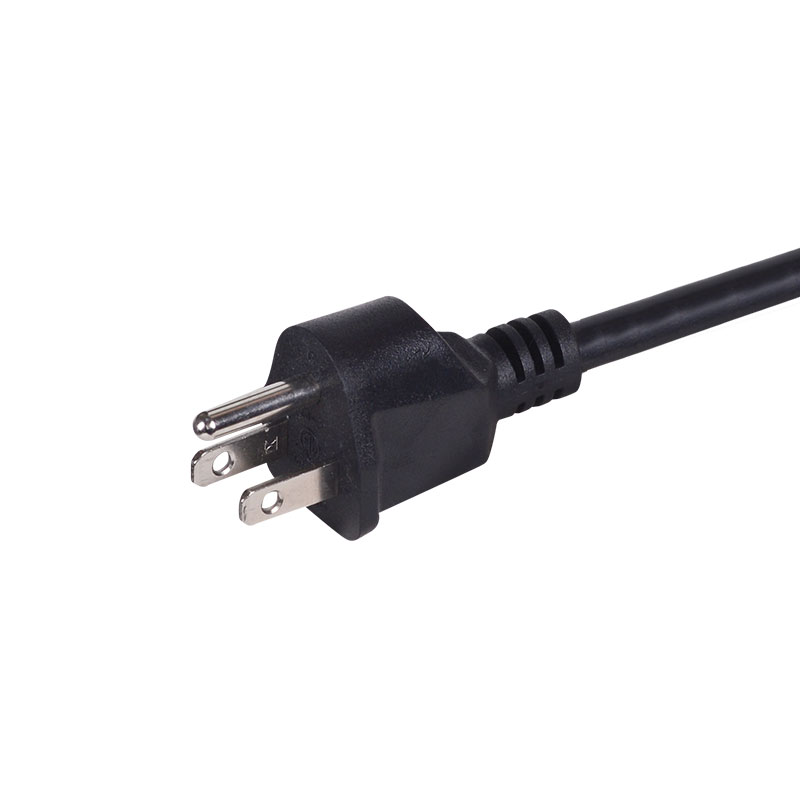
- 120V building power: NEMA 5-15P (North America).
- 230V building power: BS1363 (UK) or Schuko CEE 7/7 (EU).
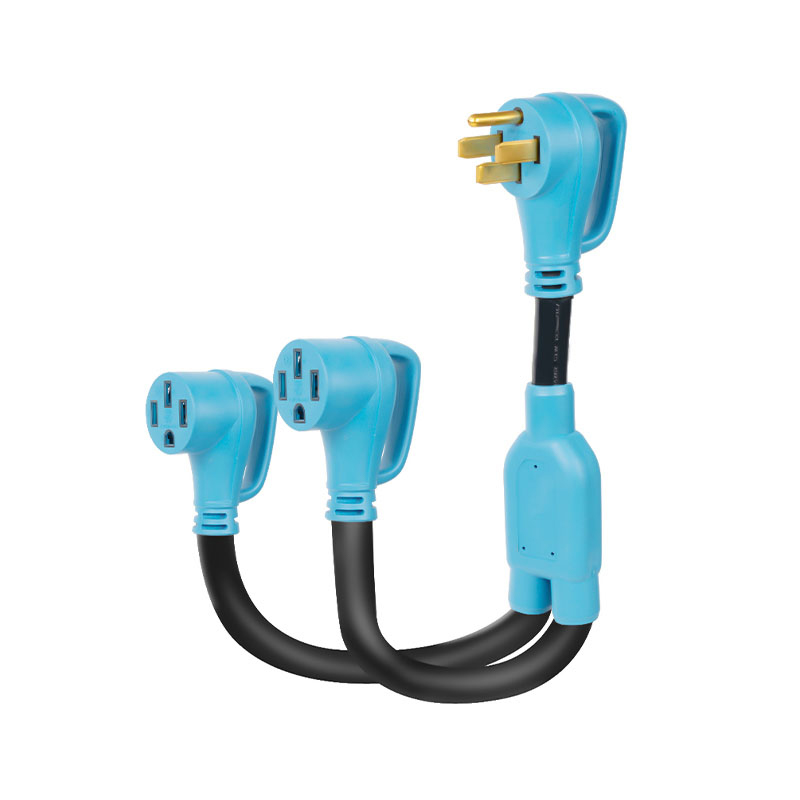
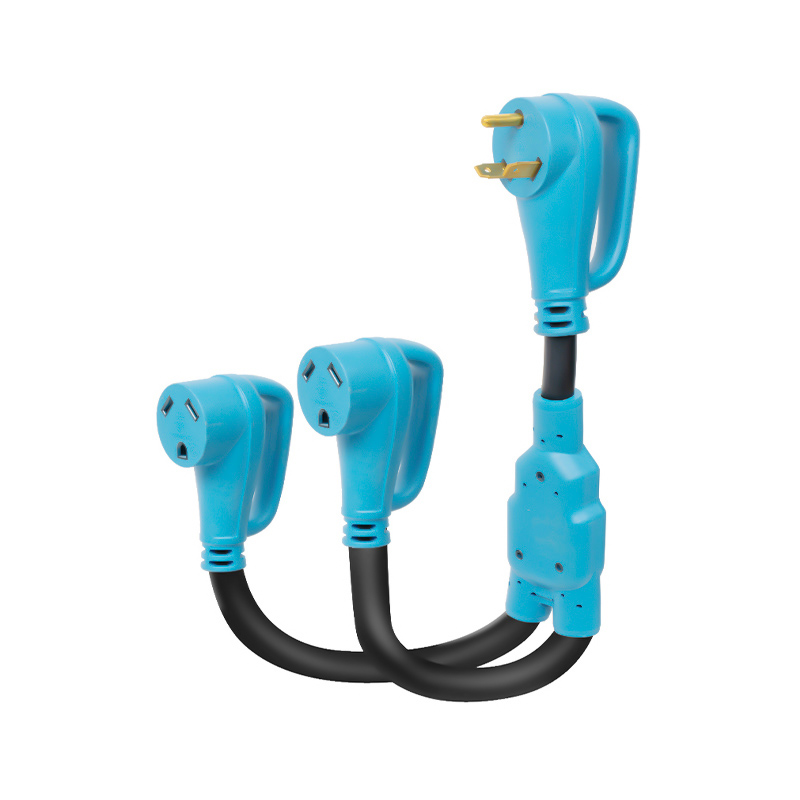
- Portable generator: twist-lock or TT-30 connectors.
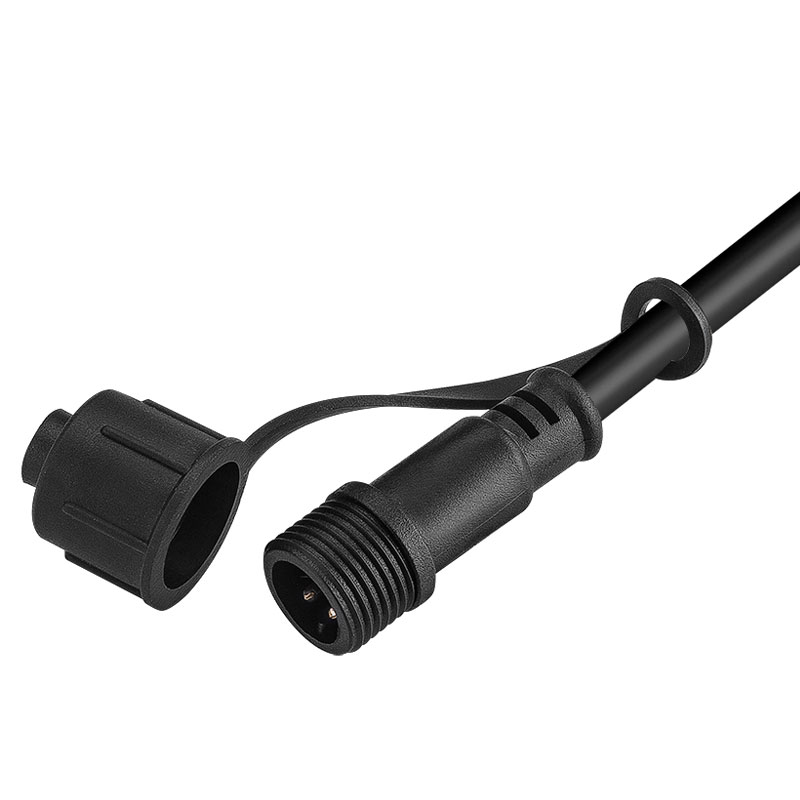
- Low-voltage task lighting: 12V or 24V DC with waterproof connectors.
- What else must the light do on site?
- Power a tool beside the lamp: choose a socket-equipped work light.
- Loop through ceiling grids: specify socket spacing and lead-in length.
- Hang from rebar or trusses: add metal hooks or cable loops.
Once the environment is fixed, output can be matched realistically. The chart below shows the typical luminous flux for LED work light segments commonly used in construction and industrial lighting:
For close-range work, a 15W LED segment roughly matches the perceived brightness of a 60-80W halogen lamp, with far less heat and a much longer service life. For wide-area temporary lighting, 20-25W segments with a 120-degree beam give a better cost per square meter.
Five Specifications That Make or Break a Custom Work Light
Beyond wattage, five details separate a work light that installs cleanly from one that causes rework:
- Light output and beam angle. Choose 4000K-5000K for construction and inspection tasks, and 3000K where the light will sit near living or retail areas. A 120-degree flood suits general area lighting; a focused reflector suits borescope-like inspection or spot repair work.
- Voltage, frequency, and plug. Matching the plug is only half the job. The driver must be built for the destination voltage and frequency, usually 120V/60Hz in North America and 230V/50Hz in Europe. A 120V-rated unit on a 230V line fails quickly; the reverse simply underperforms.
- Cable construction and length. Outdoor-rated SJTW or SJOW cord, typically 18AWG for a standard 10A string, and 16AWG or 14AWG for longer runs or higher current. Confirm the total string length, the distance between sockets, and the lead-in cord length from plug to first socket.
- Switch and socket options. A work light with a pass-through socket lets an operator plug in a drill or saw at the same height as the light. An inline switch saves trips to the breaker panel. Both options are common in custom configurations.
- Approval marks and markings. A certified light carries visible voltage, wattage, and standard marks. These are not decorative; they are the proof an inspector accepts on site.
Match the Plug and Voltage to the Destination Market
One of the most common custom requests is a work light that arrives with the correct plug for the market where it will be used. The same 10W LED string light can be produced as a 120V NEMA 5-15P version for North America, a BS1363 version for the United Kingdom, or a Schuko CEE 7/7 version for mainland Europe.
| Region | Standard | Voltage | Typical plug | Notes |
|---|---|---|---|---|
| North America | NEMA | 120V 60Hz | 5-15P | Grounded and polarized; twist-lock L5-30 for generator distribution. |
| United Kingdom | BS1363 | 230V 50Hz | Type G, 3-pin | Fused plug required; common for site lighting. |
| Mainland Europe | CEE 7/7 | 230V 50Hz | Schuko, 2-round-pin | Accepts both Type E and Type F sockets. |
| Low voltage | 12/24V DC | 12V or 24V | Waterproof IP67 connectors | For deck, signage, and temporary exhibit lighting. |
Do not rely on a field-swapped plug to fix a mismatch. Voltage, frequency, cord gauge, and certification are designed as a system; changing one part on site can invalidate the approval and create an electrical hazard. A factory that already builds multi-standard cord sets can integrate the correct plug from the start.
Certifications Decide Whether the Light Can Enter the Site
In North America, job sites and commercial facilities generally require lighting that carries cULus or ETL marks. In Europe, CE marking is the baseline. These marks are not stickers applied at the end of the line; they result from testing for electric shock, fire resistance, and mechanical integrity.
The procurement risk is concrete. An uncertified batch can be rejected by an electrical inspector, excluded from insurance coverage, or become a liability after an incident. For custom LED work lights, certification must be designed in from the start: approved components, correct internal wiring, and exactly the markings that appear on the final product. When you request a sample, ask for the corresponding certificate or test report as part of the approval process.
A Practical Checklist Before You Order
After building LED string lights and work lights for export markets, we have seen that a short checklist prevents most problems on both sides:
- Define the site environment and the minimum IP rating.
- Confirm the input voltage, frequency, and destination plug standard.
- State the lumen output per socket and the total wattage per string.
- Choose the cord gauge, total cable length, socket spacing, and lead-in length.
- Decide whether you need an inline switch, a pass-through socket, or both.
- Request certification documentation (cULus, ETL, or CE) before approving the sample.
- Ask for a pre-production sample and test it in the actual environment.
- Confirm packaging, labeling, and any private-label marking.
Custom LED work lights deliver the most value when they are specified around a real constraint: a damp tunnel, a 230V site, a string that must loop through a ceiling grid, or an outlet that has to power a drill at the same time. Once the environment, electrical standard, and certification are defined, a manufacturer with in-house R&D and multi-standard production, like Ningbo Zhenjia Electric, can turn those requirements into a light that installs cleanly and passes inspection the first time.




- [email protected]
- +(86)-0574-62162605
- +(86)-137 0584 5290
- No. 5-2, Yaobei Avenue, Simen Town, Yuyao City, Ningbo, Zhejiang Province, China
Copyright © NINGBO ZHENJIA ELECTRIC APPLIANCES CO.,LTD. All Rights Reserved. Custom Temporary String Light Manufacturers
