 English
 Español
How to Know Which Power Cord to Use?
Content
- 1 Check the Connector, Voltage and Plug Style First
- 2 Understand IEC Connector Shapes
- 3 Match the Plug to the Regional Outlet
- 4 Read the Voltage and Current Rating Carefully
- 5 Look at Wire Gauge and Conductor Material
- 6 Confirm Safety Certification Marks
- 7 Common Devices and Their Typical Cord Types
- 8 Specialized Cords for Lighting and Electric Vehicles
- 9 Generator and Twist-Lock Power Cords
- 10 Signs a Cord Needs to Be Replaced
Check the Connector, Voltage and Plug Style First
Getting the right power cord usually comes down to three checks: the connector shape on the device side, the voltage and current rating, and the plug style for the wall outlet in whatever country the equipment sits in. A cord can fit perfectly and still be wrong — the shape matching doesn't guarantee the voltage matches, and the reverse is true too. The rating plate on the device is where this starts, not the cord aisle. It lists the voltage, frequency and current the equipment was actually built to handle, and that's the number worth writing down before buying anything.
Understand IEC Connector Shapes
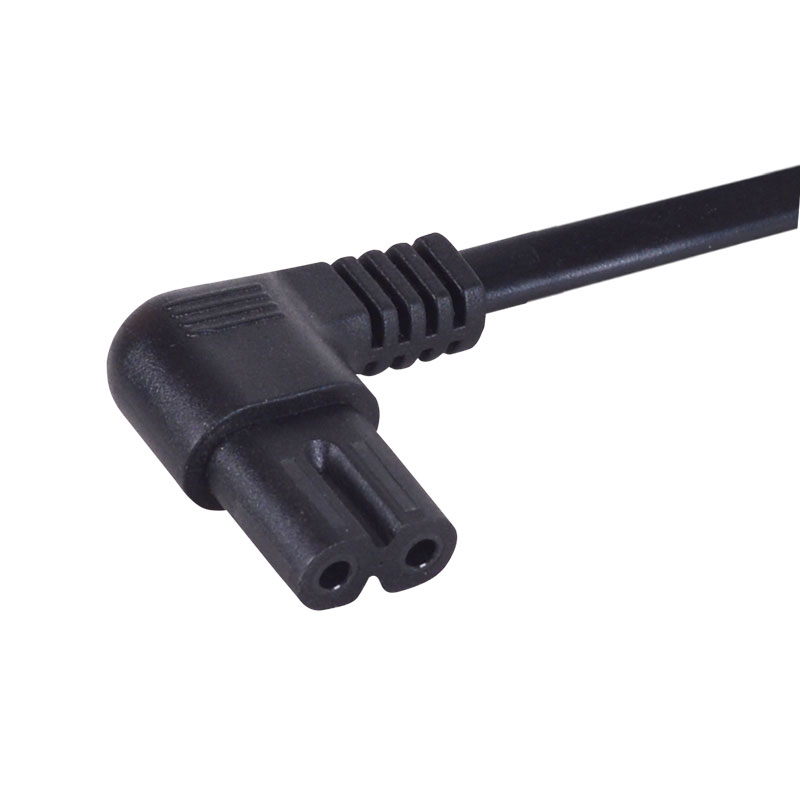
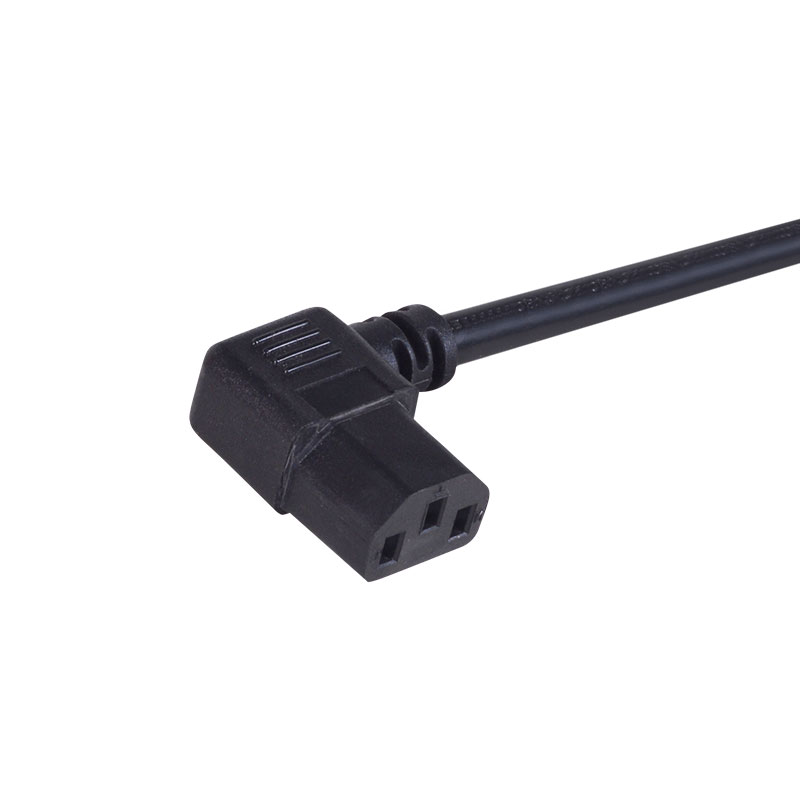
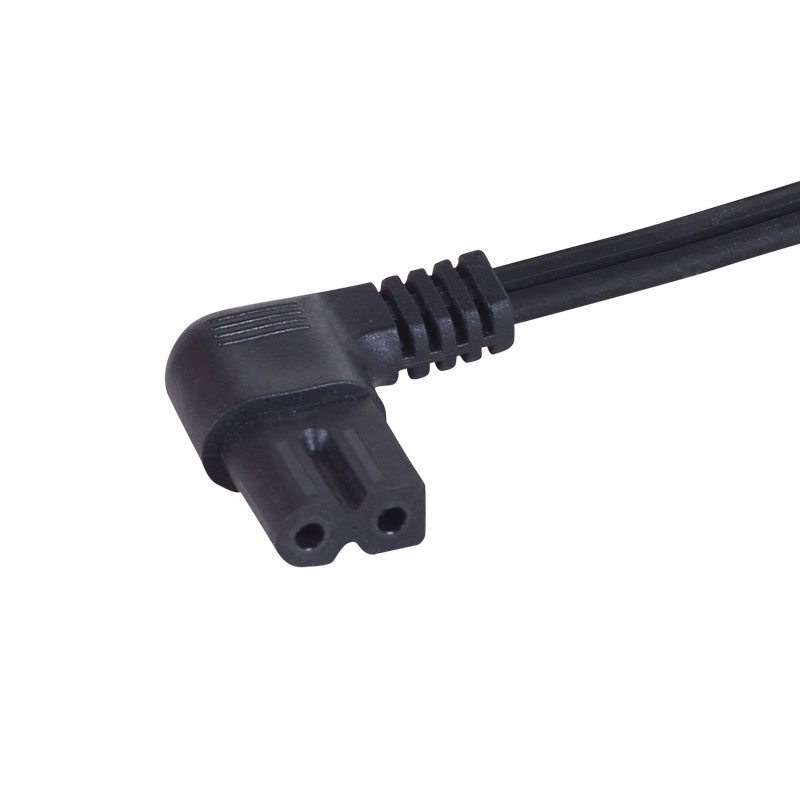
A lot of electronics — desktop computers, monitors, audio receivers — use IEC 60320 connectors instead of a plug molded straight onto the device. The C13/C14 pair is the one most people have seen without knowing its name: a rectangular connector with rounded corners, rated around 250V and 10A, sitting on the back of nearly every desktop PC and monitor made in the last two decades. There's a smaller cloverleaf-shaped version, C5/C6, used on laptop power bricks and some projectors, rated closer to 250V and 2.5A. C7/C8 (the "figure-8" connector) shows up on shavers, game consoles and compact speakers. And for anything pulling real current — server racks, professional audio gear — C19/C20 is the one to look for, rated near 250V and 16A. It's visibly wider than C13/C14, which is on purpose.
Why the Shape Matters
The size differences aren't arbitrary. A low-current cord physically can't be jammed into a socket built for higher current, and that's the whole point — it's a mechanical safety check built into the plastic itself. Forcing it, or using an adapter that files down that difference, removes the one safeguard that was designed to stop this exact mistake.
Match the Plug to the Regional Outlet
The device-end connector tends to follow IEC standards, but the wall-end plug depends entirely on where the equipment is plugged in. North America runs on NEMA 5-15 plugs, 125V and 15A, for ordinary household circuits. Much of Europe uses either the two-round-pin Europlug or the CEE 7/7 Schuko plug, both closer to 230V. The UK, Ireland and Singapore use BS 1363 — the three-pin plug with a fuse built right into it, usually rated 3A, 5A or 13A depending on what's attached. Australia and New Zealand use the flat-pin AS/NZS 3112 plug, around 240V and 10A. Buying the correct regional plug up front saves the hassle of a travel adapter later. Adapters work fine for a trip, but they're not really meant for permanent use — they add resistance and one more point where things can go loose.
Read the Voltage and Current Rating Carefully
Every cord that's actually built to spec has its voltage and current rating printed or molded onto the jacket near the plug. This isn't decoration. A 125V-rated cord used somewhere the supply runs 230V to 240V is a problem, because the insulation and internal spacing were engineered for the lower ceiling, not the higher one. Current rating works the same way. A 7A cord feeding something drawing close to 10A will run hotter than it should, and that heat doesn't go away — it slowly breaks down the insulation over months of use. For reference, a toaster or electric kettle can pull anywhere from 8A to 13A, so the cord feeding it needs some headroom above that draw, not a rating that just barely covers it.
Look at Wire Gauge and Conductor Material
Wire gauge — AWG in North America, square millimeters most other places — is what determines how much current a cord can carry before heat becomes an issue. 18 AWG shows up on light-duty stuff: lamps, small chargers. 16 AWG or 14 AWG goes on cords feeding heavier draws, things like space heaters, vacuums, window air conditioners. One quirk worth knowing: lower AWG numbers mean thicker wire, which trips people up the first time they see it written on a spec sheet. Conductor material matters too. Copper, solid or stranded, is still the standard for a reason — it conducts well and holds up to flexing. Some cheaper cords swap in copper-clad aluminum instead, which carries less current for the same thickness and tends to loosen at crimped connections faster over time. Jacket material follows a similar logic. PVC is common indoors because it's flexible and inexpensive. Outdoor or industrial cords usually switch to rubber or thermoplastic elastomer, which stands up better to sun, moisture and getting coiled and uncoiled constantly. Heavy duty cords used at outdoor events or construction sites tend to combine the thicker gauge with that tougher jacket, simply because they get handled so much more roughly than a cord sitting behind a desk.
Confirm Safety Certification Marks
A real power cord carries an independent test mark somewhere on it. In North America that's c(UL)us or ETL. In the EU it's CE plus a national testing mark. In China it's CCC. These aren't just stickers — they mean the cord went through testing for insulation integrity, fire resistance and whether it actually carries the current it claims to. Manufacturers supplying regulated markets, Ningbo Zhenjia Electric Appliances Co., Ltd. among them, generally build power cords and adapters under an ISO 9001 quality system, with c(UL)us, ETL and CE certification running across the product line — which makes sense, since equipment sold into the US or Europe is expected to come with that kind of documented testing already done. A cord with no visible certification, or one where the printed rating looks off compared to the connector's actual size, isn't worth the savings. The internal wire on uncertified cords doesn't always match what's printed on the outside.
Common Devices and Their Typical Cord Types
Most household and office equipment settles into a few predictable connector patterns, so once the device type is known, narrowing down the right cord gets a lot easier.
| Device Type | Typical Connector | Approximate Rating |
|---|---|---|
| Desktop computer, monitor | C13/C14 | 250V, 10A |
| Laptop power adapter | C5/C6 | 250V, 2.5A |
| Game console, small appliance | C7/C8 | 250V, 2.5A |
| Server, rack equipment | C19/C20 | 250V, 16A |
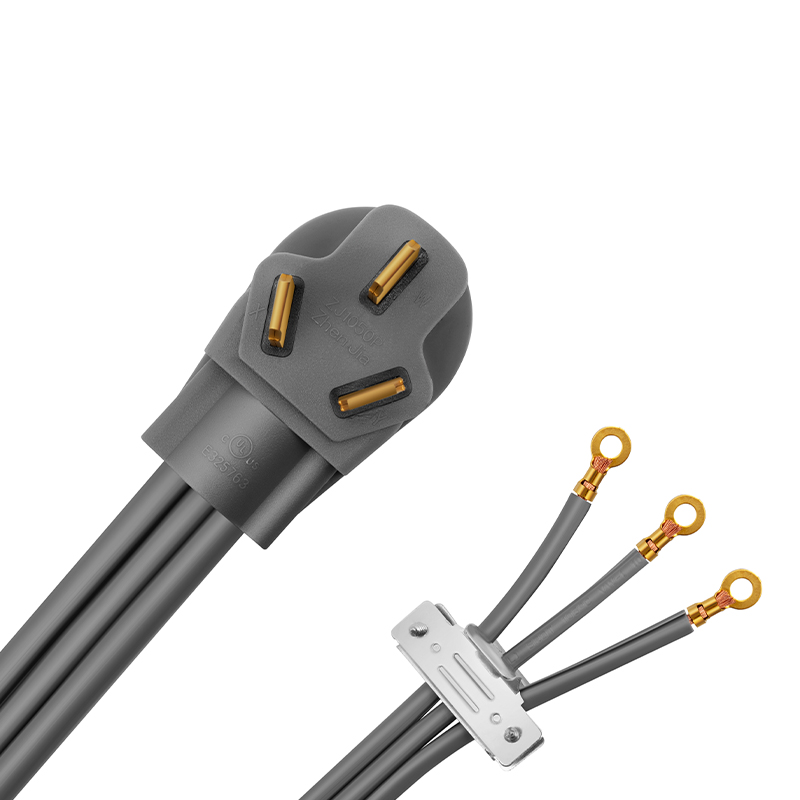
| Kitchen appliance, space heater | Molded regional plug | 125V-240V, 10A-15A |
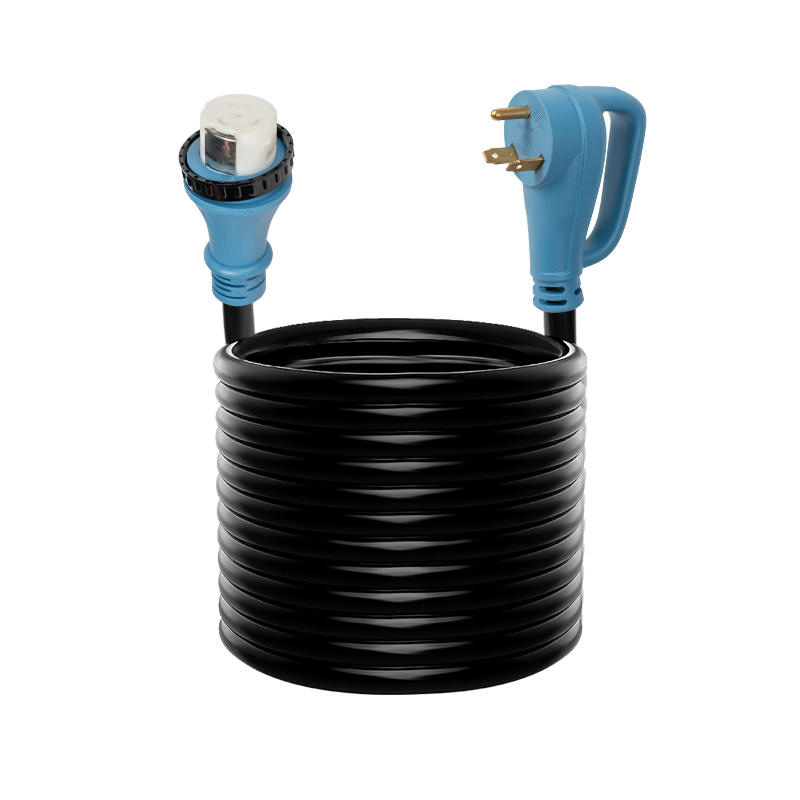
| RV or camper hookup | 30A/50A RV adapter | 125V/250V, 30A-50A |
Specialized Cords for Lighting and Electric Vehicles
Some applications don't fit neatly into the categories above. Temporary string lights — the kind strung up at outdoor restaurants, backyard parties, seasonal displays — depend on outdoor-rated wiring and weatherproof sockets, since they're often left up through rain and sun for weeks at a stretch, and the connecting cord between fixtures needs to be built for that instead of the lighter indoor cord on a table lamp. EV charging is its own world entirely. In North America, SAE J1772 defines the Type 1 connector for Level 1 and Level 2 AC charging. Most of the rest of the world uses Type 2 under IEC 62196 instead. China runs on the GB/T standard for both AC and DC charging cables, with a pin layout that doesn't physically match J1772 or Type 2 — so a charging cable bought for one region generally won't plug into a car built around a different standard, adapter or not, unless that adapter was specifically designed for the conversion. Companies working across this range — Ningbo Zhenjia Electric Appliances Co., Ltd. and its overseas facility being one example — end up manufacturing power cords, string light hardware and EV charging connectors as fairly separate product lines, each held to whatever standard its destination market requires.
Generator and Twist-Lock Power Cords
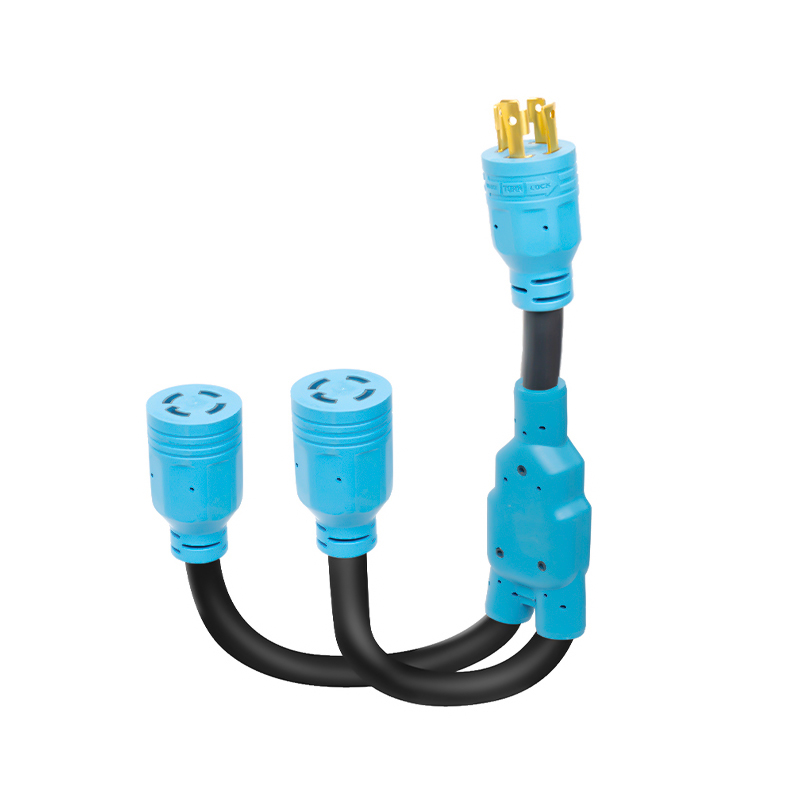
Generators and other high-draw outdoor equipment usually run on a different connector family than the flat-blade plugs found on household electronics. NEMA L-series twist-lock connectors work by inserting the plug and rotating it a quarter turn until it locks, which keeps the connection from shaking loose — a real risk with a generator sitting on uneven ground or getting bumped mid-use. A generator power cord built around the NEMA L5-30P/L5-30R configuration is a common example here, rated for 30 amps on a 125V single-phase circuit, and it shows up a lot for running backup power to household appliances or powering tools at a job site.
Whole-House and Transfer Switch Applications
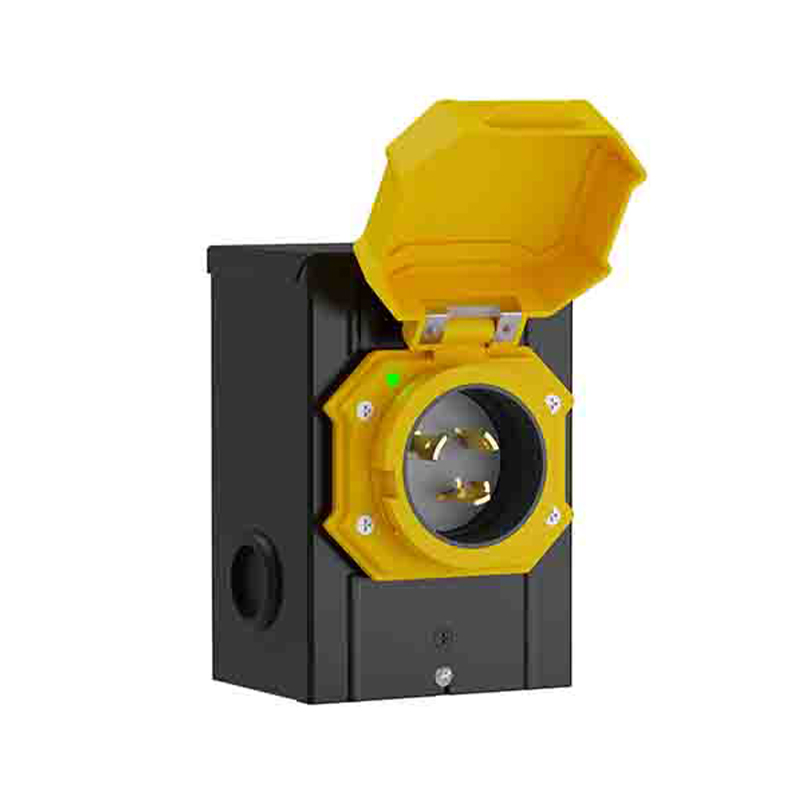
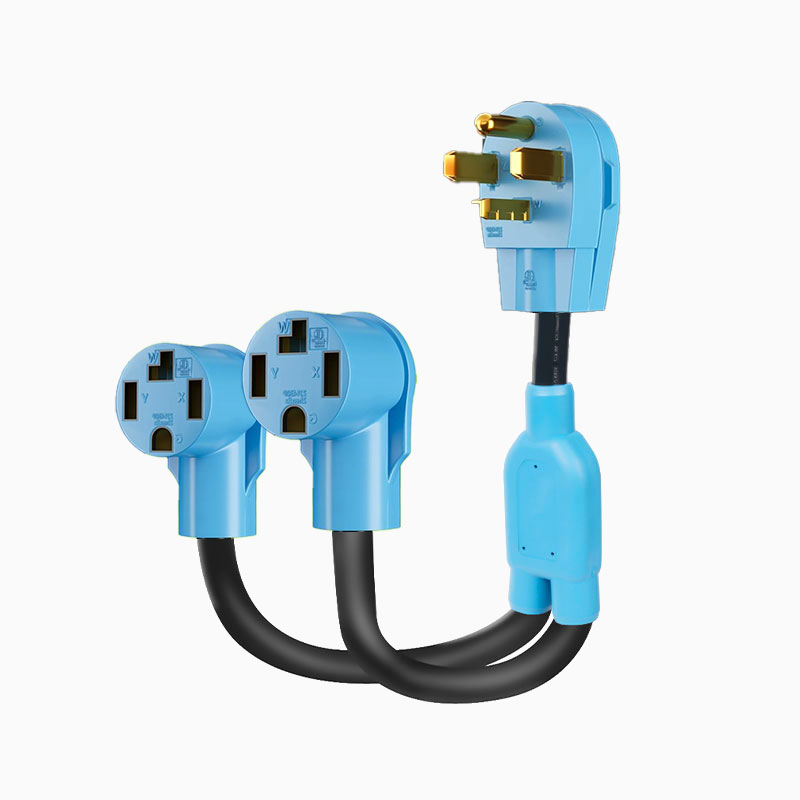
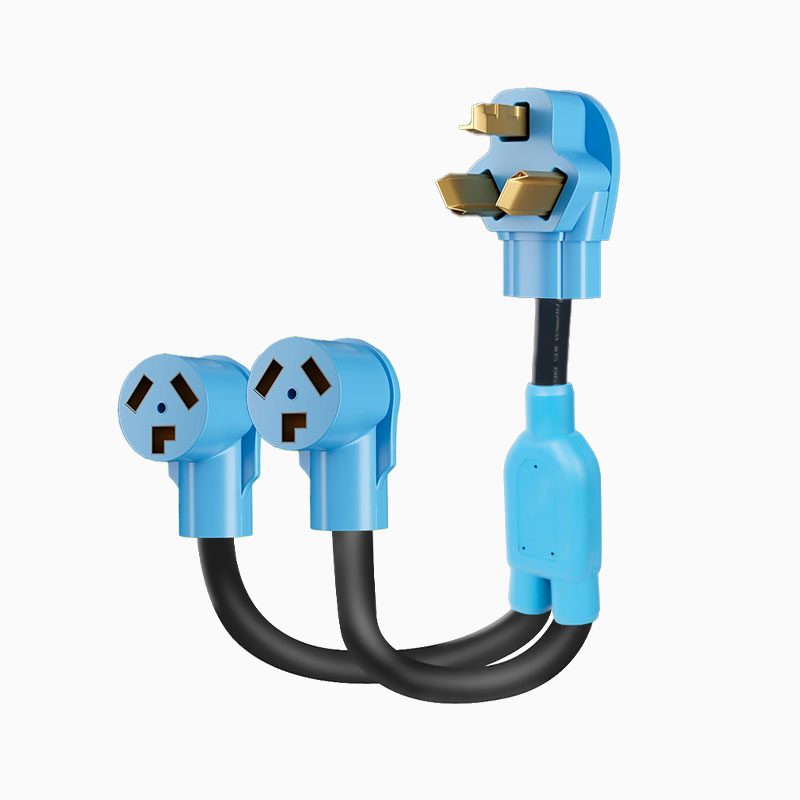
Whole-house backup setups usually call for an NEMA L14-30P/L14-30R cord instead. The L14-30 configuration carries 120/240V split-phase power through a transfer switch or an inlet box mounted on the outside of the house, which lets a generator feed several circuits at once during an outage instead of powering one appliance at a time off a single outlet. The same generator power cord doubles as a general outdoor extension cord for tools or patio equipment when it's not hooked up to a transfer switch. There's also the NEMA TT-30P to L5-30R adapter cord, which converts a standard 30A RV-style plug into a twist-lock receptacle — handy when a generator's outlet doesn't match the plug on an RV, travel trailer or job-site power kit.
Weatherproofing and Outdoor Ratings
A generator power cord lives outside almost by definition, so the jacket and connector housing matter just as much as the electrical numbers. Cords built for this kind of use have weather-resistant insulation, often rated across a wide temperature range, with connector housings shaped to shed water instead of collecting it around the pin contacts. Inlet boxes for permanent transfer switch installs are usually pre-drilled for mounting and sealed once installed, since they sit exposed to rain and temperature swings all year. Checking for an ETL or UL listing before installing a twist-lock cord or inlet box is worth the extra minute — it means the weatherproofing and current capacity were actually verified, not just written on the box.
Signs a Cord Needs to Be Replaced
A cord should get swapped out the moment physical damage shows up, even if the device still seems to work fine. Cracked or brittle insulation, exposed copper strands, a plug that feels loose in the socket, a connector that's warm to the touch during normal use — any of these is reason enough. Kitchens and workshops tend to wear cords out faster than office settings do, since heat, grease and repeated bending near the plug base chip away at the insulation over time. When it's time to replace one, matching the original spec sheet — or at minimum, connector shape, voltage rating and current rating together — keeps everything running within the limits it was actually built for.
- [email protected]
- +(86)-0574-62162605
- +(86)-137 0584 5290
- No. 5-2, Yaobei Avenue, Simen Town, Yuyao City, Ningbo, Zhejiang Province, China
Copyright © NINGBO ZHENJIA ELECTRIC APPLIANCES CO.,LTD. All Rights Reserved. Custom Temporary String Light Manufacturers
