 English
 Español

Extension Cord Manufacturer Guide: Standards, Wire Gauge and Sourcing Checks
Content
- 1 What Separates a Manufacturer from a Trading Office
- 2 Start With the Plug Standard, Then Work Backwards
- 3 Wire Gauge, Length and Ampacity: The Three Numbers Buyers Get Wrong
- 4 Application Mapping: Where the Cord Actually Lives
- 5 Certification and Documentation: What to Ask For Before the Sample Ships
- 6 Order Discipline: Samples, Tolerances and Lead Times
- 7 A Short Sourcing Checklist
A 16 AWG cord sold as a 13 A extension lead and a 14 AWG cord carrying the same printed rating can look identical on a shelf. The difference turns up in year three — a plug that runs warm, a jacket that hardens, or a container held at port because the certification mark on the label does not match the model in the carton.
So the conclusion first: the right extension cord manufacturer is the one that ties a certification mark to the exact model you are buying, publishes wire gauge and ampacity on the datasheet, and builds its catalogue around plug standards rather than decorative features. Price is the last filter, not the first.
What Separates a Manufacturer from a Trading Office
A trading office can quote in a day. It cannot always control the copper inside the jacket, the terminal crimp height, or which injection mould the plug shell came from. Those three variables decide whether a cord survives a 25 ft pull, a summer in a garage, and a routine safety inspection.
Ask for four proofs before a sample is even discussed:
- Certification scope documents that name the specific model, not just the company
- A specification sheet listing conductor, insulation, jacket compound and temperature rating
- Test reports covering polarity, continuity, hipot and plug retention force
- An ISO 9001 certificate or factory audit report with a visible expiry date
Ningbo Zhenjia Electric has produced power cords and extension cords from Ningbo since 2006, running moulding, assembly and testing in-house and adding an overseas plant so buyers can qualify a second production site without opening a second certification file. That combination — domestic scale plus an overseas line — is usually what separates a manufacturer from a reseller.
Start With the Plug Standard, Then Work Backwards
Every extension cord is really two decisions stacked on each other: the plug interface and the conductor. Buyers who start with the conductor almost always come back to fix the plug. The plug family narrows everything else — fuse requirement, pin spacing, acceptable voltage, certification body, even the jacket colour that sells in that market.
| Market | Plug standard | Typical extension cord build | Buyer note |
|---|---|---|---|
| United States / Canada | NEMA 5-15P, 5-20P, 6-15P, 6-20P | 16–14 AWG, 2 or 3 conductor, 6–100 ft | c(UL)us or ETL mark expected |
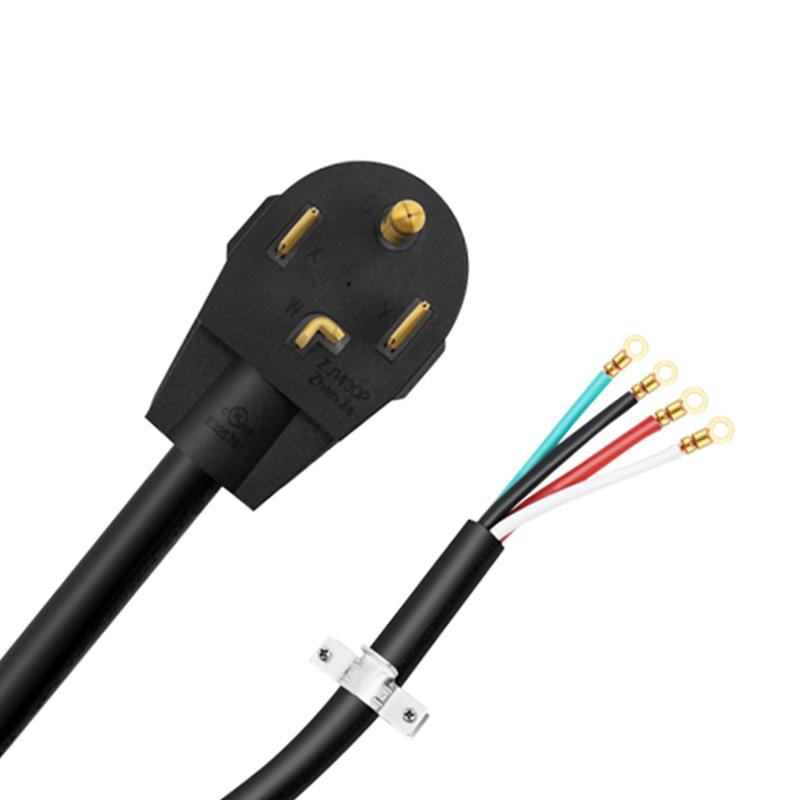
| US heavy duty | L5-30P, L14-30P, 14-50P, TT-30P | 10 AWG and 10/4, twist lock or straight blade | Usually generator, RV or EV related |
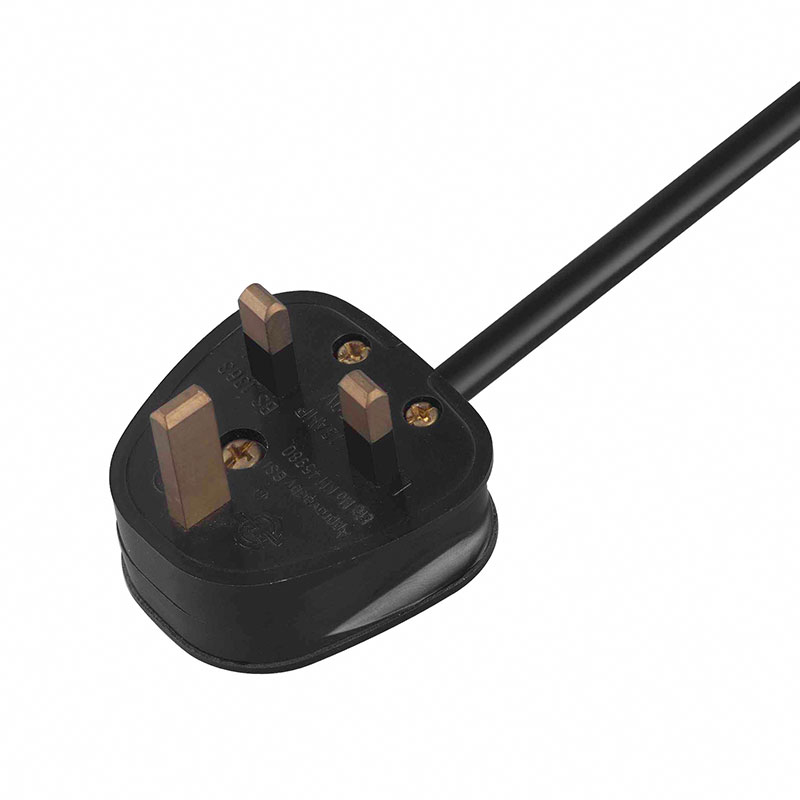
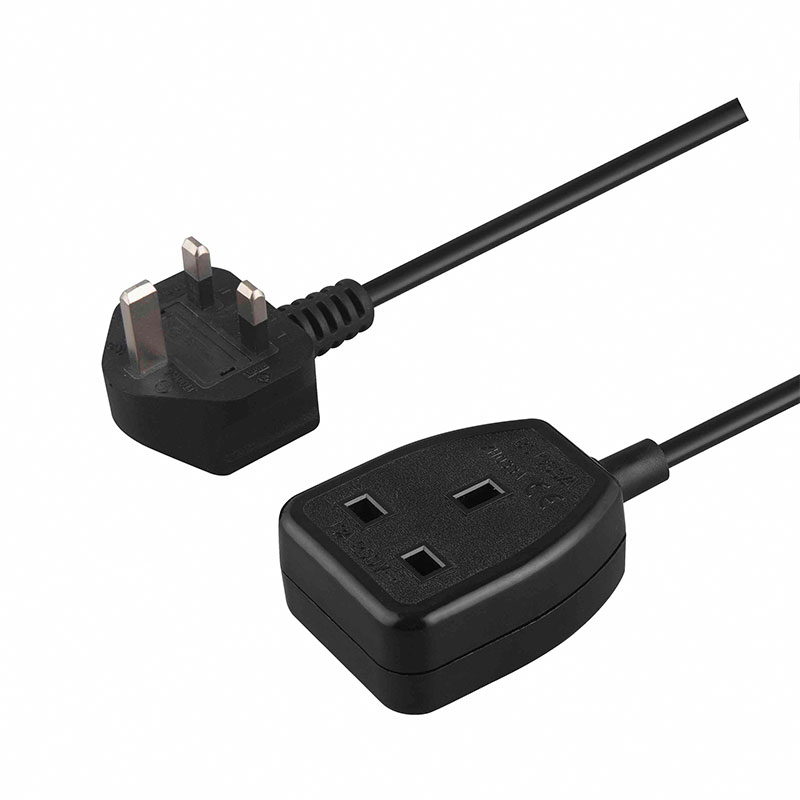
| United Kingdom | BS 1363 Type G | 3 prong with fused plug, 13 A | Fuse rating must match the cord |
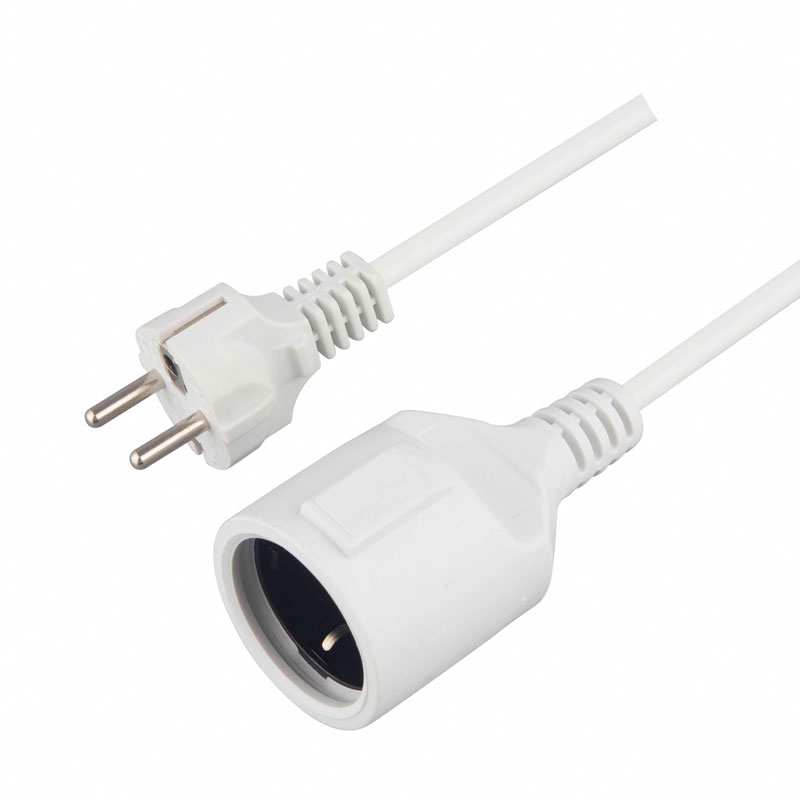
| European Union | CEE 7/7 Schuko, Type E/F | 2 prong, 16 A, 250 V | CE declaration required |
| Brazil | NBR 14136 | 3 prong with IEC C13 | Often supplied as a device cord |
One practical trap: a 5-15P cord and a 5-20P cord look almost identical, but a 5-20P plug will not seat in a 5-15R receptacle. If your customer base mixes the two, specify both builds and label the packaging clearly, or the returns will find you. A broader reference on extension cord types, standards and applications is worth keeping on file while you write the specification.
Wire Gauge, Length and Ampacity: The Three Numbers Buyers Get Wrong
Wire gauge is where the cheapest quote becomes the most expensive order. A cord that uses 18 AWG where 14 AWG is required will pass a bench test and fail a thermal inspection. Three numbers control the decision: conductor size, run length and continuous load. They trade against each other — doubling the length roughly doubles the voltage drop, and going up one gauge roughly halves it.
| Conductor size | Typical rating | Common lengths | Typical load |
|---|---|---|---|
| 18 AWG | 7–10 A | 2–15 ft | Lamps, chargers, small appliances |
| 16 AWG | 10–13 A | 6–25 ft | Office equipment, fans, tools |
| 14 AWG | 15 A | 10–50 ft | Power tools, kitchen appliances |
| 12 AWG | 20 A | 25–100 ft | Workshop tools, outdoor equipment |
| 10 AWG / 10-4 | 30 A | 15–50 ft | RV, generator, dryer, EV |
Relative continuous-load headroom by conductor size, same 50 ft run at 125 V:
18 AWG ██
16 AWG ████
14 AWG ████████
12 AWG ███████████
10 AWG ███████████████
For a 15 A circuit, 14 AWG is the safe default up to about 50 ft. Beyond that, move to 12 AWG or accept the drop. For generator and RV runs at 30 A, 10 AWG or 10/4 is the working specification — undersizing here is the most common failure found in returned samples, and it rarely shows up until the load is continuous rather than intermittent.
Application Mapping: Where the Cord Actually Lives
The same electrical logic produces very different products once the environment is added. A deck light feed, a jobsite string light run and a generator adapter all need copper; they need completely different jackets, connectors and mechanical protection.
- Extension cords
- Residential and office
- NEMA 5-15P general purpose builds
- Flat plug, right angle and fused variants
- Outdoor and wet location
- Waterproof 2 and 3 conductor cable
- LED deck and landscape feeds
- Jobsite
- LED string lights for temporary rigging
- Work lights with switch and receptacle
- RV, generator and EV
- TT-30P and L5-30 builds
- 14-50 and 14-30 distribution and adapters
- Residential and office
Wet locations change the requirement from "water resistant" to "sealed". For LED deck and landscape lighting, a moulded 2 pin waterproof extension cable at 18 AWG — with 14 or 16 AWG available for longer runs — handles the connection without a separate junction box. Cords in this family are usually specified by the fixture they serve rather than by the load, because the load is tiny and moisture is the real risk.
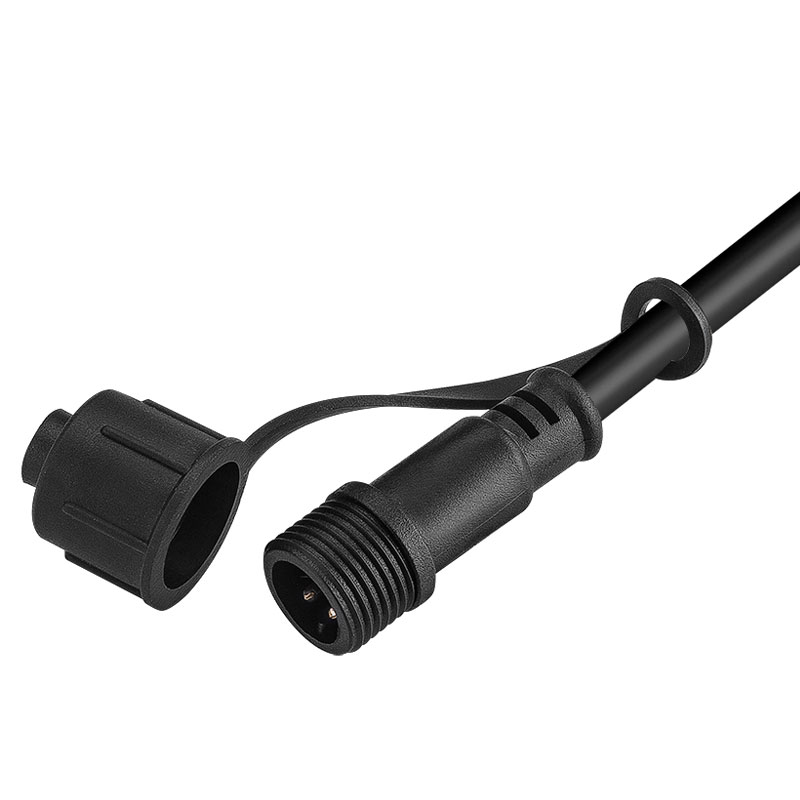 Waterproof 2-Pin LED Deck Light Extension CableMoulded 2-pin extension cable for sealed LED deck and landscape connections, available in 18, 16, and 14 AWG with multiple lengths.View Product →
Jobsite lighting is a different problem: impact, oil, temporary rigging and a need to daisy chain. A 10 W LED construction string light with moulded sockets and a heavy jacket is built to be strung between poles and left out overnight. The gauge here is chosen for the run length across a site, not for the wattage of each lamp, and the connector bodies take more abuse than the cable itself.
 10W LED Construction String Light Set, 100 ftLinkable 100 ft jobsite string light set with 10 bulbs, 10,500 lm output, IP65 rating, and up to eight sets connected.View Product →
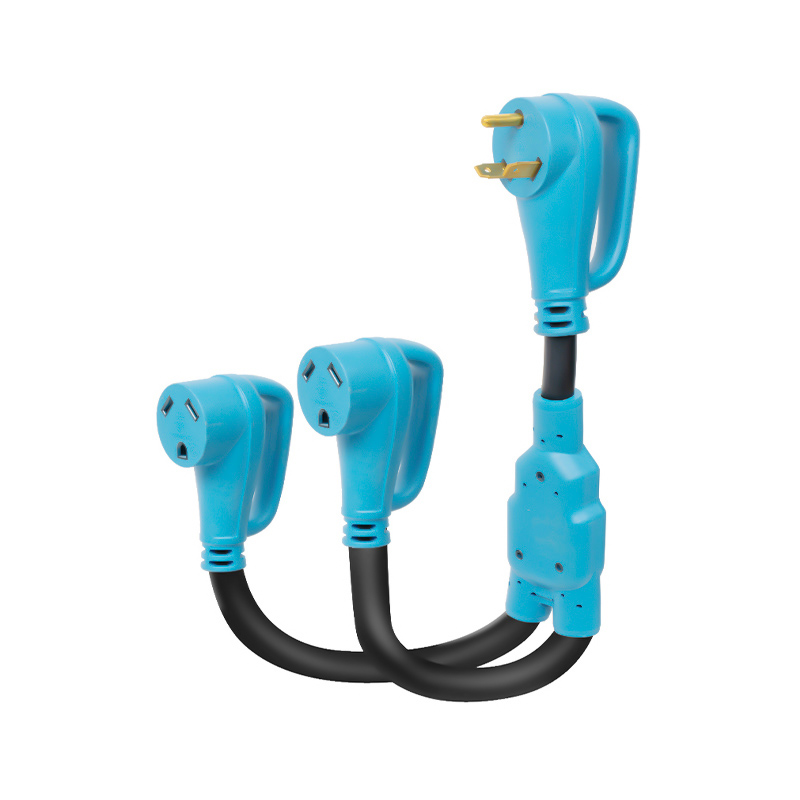
Generator and RV connections sit at the other end of the spectrum. A 30 A to 110 V outdoor generator adapter cord takes a twist lock or TT-30P outlet and breaks it down into household receptacles — a simple part that fails badly if the moulded ends are not rated for the full current or if the neutral is shared incorrectly.
 30A to 110V Generator Adapter Cord with Three OutletsOutdoor adapter cord converts a NEMA L5-30P generator outlet to three 5-20R household receptacles for temporary backup power.View Product →
Certification and Documentation: What to Ask For Before the Sample Ships
Certification marks are not interchangeable. A c(UL)us listing covers the US and Canada, an ETL mark covers US electrical safety, and a CE declaration covers the EU. Each is issued against a specific construction, so a change in conductor, plug or jacket compound can invalidate the file unless the manufacturer re-tests and updates it.
Ask for the certificate with the model number printed on it, the test report behind it, and a written statement of which changes trigger re-certification. A supplier who cannot answer the last question is not managing the file — they are borrowing someone else's. That is the single most common compliance gap found during a first factory audit, and it is far cheaper to catch before tooling than after.
Order Discipline: Samples, Tolerances and Lead Times
Samples and production should be the same construction, not a hand-built cousin of it. Request a first article inspection report covering crimp height, pull test, polarity, hipot and dimensional check on the plug before the bulk run starts.
- Length tolerance — state it explicitly and state how it is measured
- Colour and braid options — single colour and two colour woven braid are different processes with different lead times
- Packaging — header cards, ties and warning labels all affect landed cost
- Sampling — agree the AQL level and who performs final inspection
None of this is exotic. It is simply the difference between a supplier who has run these orders before and one who is learning on your purchase order.
A Short Sourcing Checklist
- Confirm the plug standard matches the destination market, including fuse requirements.
- Match conductor size to continuous load and run length, not to the catalogue photo.
- Verify the certification mark is tied to the exact model number.
- Ask what construction changes require re-certification.
- Check that the factory, not just the sales office, performs routine electrical testing.
- Agree length tolerance, packaging and AQL before the first article run.
An extension cord is a low-cost part with a high-cost failure mode. The manufacturer you choose should be able to show you the certificate, the gauge and the test data before you commit to a purchase order — and should still be able to show them after the third reorder. Get those three things in writing, and the price conversation becomes a much shorter one.



- [email protected]
- +(86)-0574-62162605
- +(86)-137 0584 5290
- No. 5-2, Yaobei Avenue, Simen Town, Yuyao City, Ningbo, Zhejiang Province, China
Copyright © NINGBO ZHENJIA ELECTRIC APPLIANCES CO.,LTD. All Rights Reserved. Custom Temporary String Light Manufacturers
