 English
 Español

Lamp Cord Selection Guide: Wire Gauge, Plug Types, Switches and Outdoor Safety
Content
A table lamp that flickers when you flex the cord near the plug is usually reporting a failed conductor or strain relief, not a bad bulb. Replacing a lamp cord looks like a five-minute job, but the replacement has to match three things at once: the current the fixture draws, the way the cord is handled, and the environment it sits in.
The short answer: pick the lightest cord that carries the load with margin, then pick the jacket, plug and switch for the location. An 18 AWG SPT-1 cord is a sensible choice for a 60 W table lamp. The same cord is a poor choice for a 300 W floor lamp that gets moved, and it is the wrong choice outdoors even when the lamp itself is rated for damp locations.
Lamp cord families: SPT, SVT, SJT and what the letters mean
Lamp cord is a category, not one product. The letters printed on the jacket describe insulation, jacket shape and service level, and those letters set the temperature, voltage and mechanical limits that matter in a specification.
- Parallel cords
- SPT-1 - 18 AWG, thin jacket, decorative and accent lamps
- SPT-2 - 16 AWG, thicker jacket, floor lamps and longer runs
- SPT-3 - heavier parallel jacket for larger fixtures
- Round cords
- SVT - 18 AWG, flexible, appliance-style handling
- SJT - 18-16 AWG, hard-service jacket, work lights
- Specialty
- HPN - heater cord, heat resistant
- Flat-plug and right-angle plug variants for tight wall clearance
For most residential lamps the real decision is SPT-1 versus SPT-2. SPT-1 uses 18 AWG conductors in a thin parallel jacket; it is cheap, flexible and adequate for small shades and accent lamps. SPT-2 steps up to 16 AWG and a thicker jacket, which gives more abrasion margin and less voltage drop on longer runs. Round cords such as SVT and SJT cost more, but they resist repeated handling and fit better through grommets and swivels. HPN appears where heat is the enemy, such as a lamp near a heating element or inside an enclosed fixture.
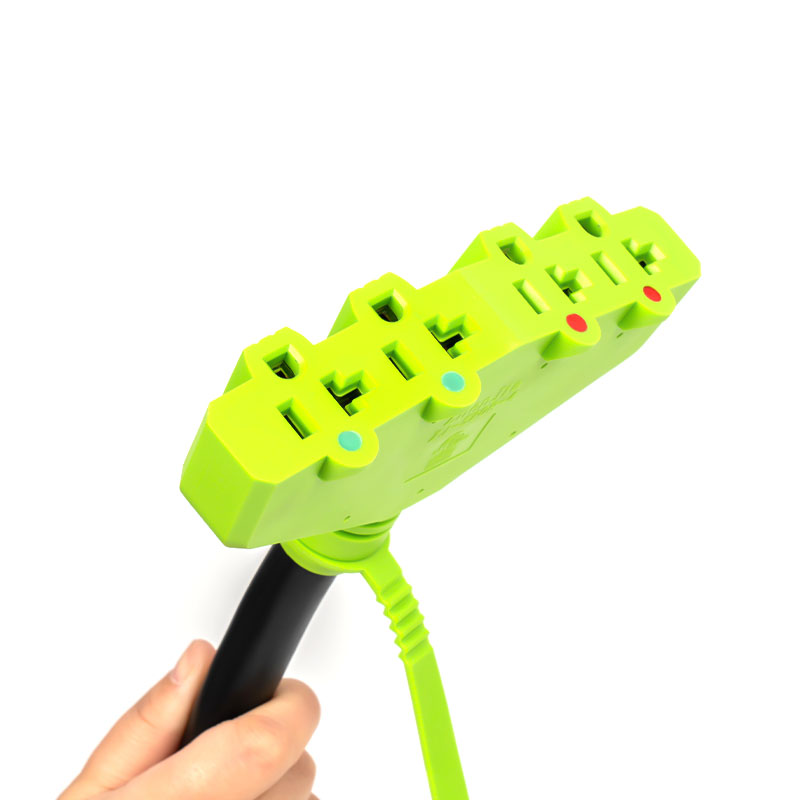
 Custom Lamp Cord and Lighting Wiring AssembliesFlexible lamp cord for lamps, string lights and OEM lighting assemblies, with plug, socket and termination options confirmed by quotation.View Product →
A useful rule: if the cord will be pulled, stepped on or wrapped around the fixture, move up from parallel SPT to a round SJT. If the cord is fixed and hidden, SPT-2 is usually the better value than SPT-1 for only a small cost difference.
Gauge, current and length: the numbers that decide
Conductor gauge is the first hard constraint. An undersized cord runs warm at the plug, and the heat concentrates exactly where the connection has the least protection. The chart below shows typical cord-set ratings; the fixture nameplate still governs the actual load.
Typical cord-set current ratings (North America)
| Cord type | Typical current | Best fit | Watch-out |
|---|---|---|---|
| 18 AWG SPT-1 | 7-10 A | Table lamps, small pendant kits | Thin jacket; not for repeated flexing |
| 16 AWG SPT-2 | 13 A | Floor lamps, longer runs | Check the plug rating, not just the cord |
| 18 AWG SVT | 10 A | Fixtures handled often | Round jacket needs a matching grommet |
| 18-16 AWG SJT | 13 A | Work lights, job-site lamps | Heavier and stiffer; plan the bend radius |
| 14 AWG | 15 A | High-wattage fixtures, short runs | Connector and switch must match |
Two practical notes. First, the rating printed on the cord applies to the cord set, not to the fixture. Second, length has a cost. On a 25 ft 18 AWG cord at 10 A, voltage drop is small but not zero, and the cord becomes harder to manage. For runs over 6 ft at 13 A, 16 AWG is the safer default; for 15 A fixtures, use 14 AWG.
If you are matching a cord to an existing plug and receptacle, the broader logic in this power cord selection guide applies: connector first, then gauge, then jacket.
Plugs, polarity and switches: the details buyers notice
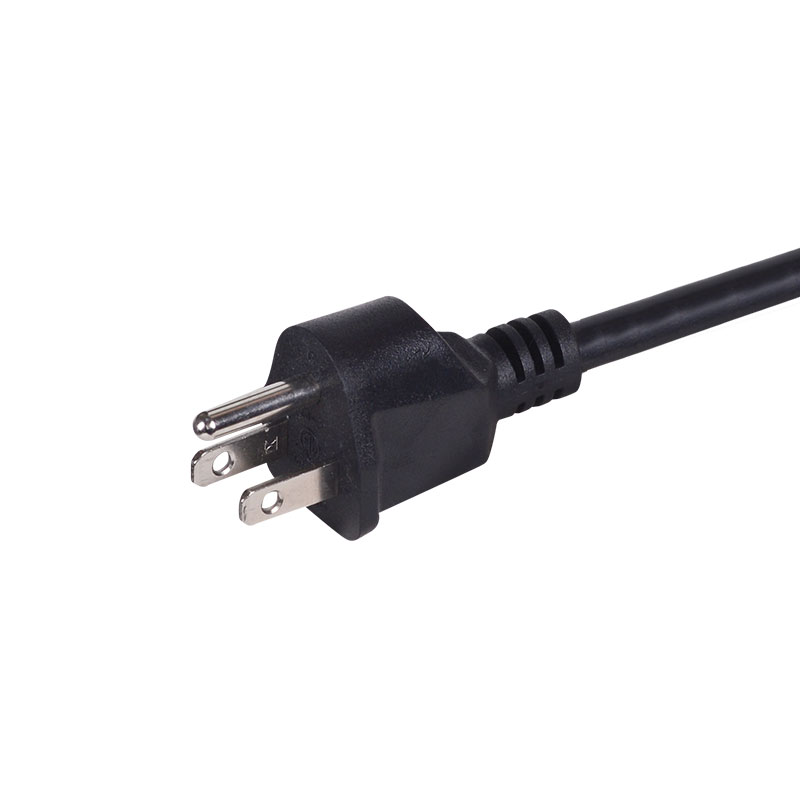
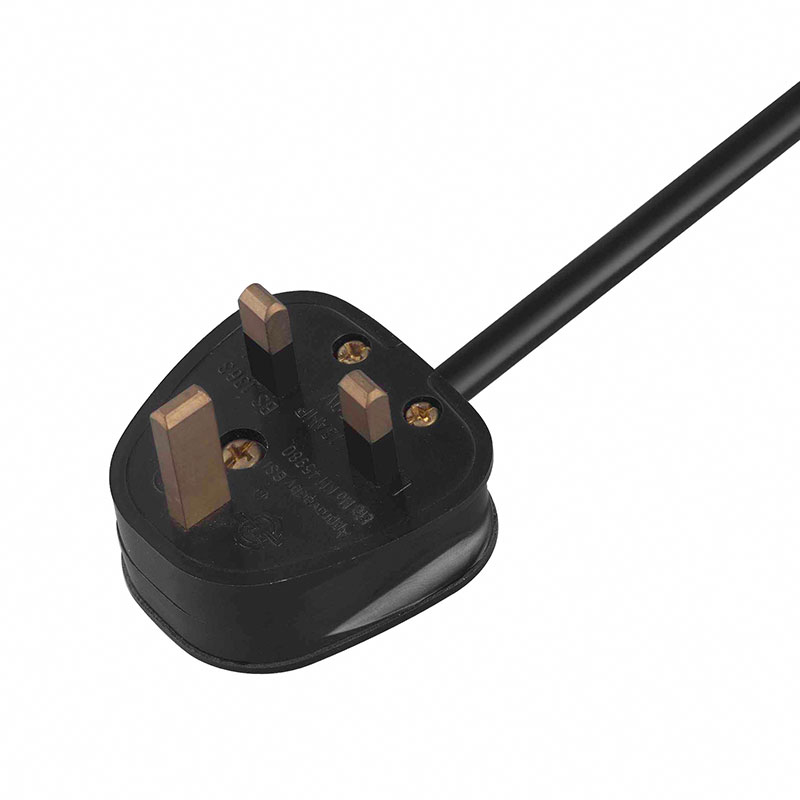
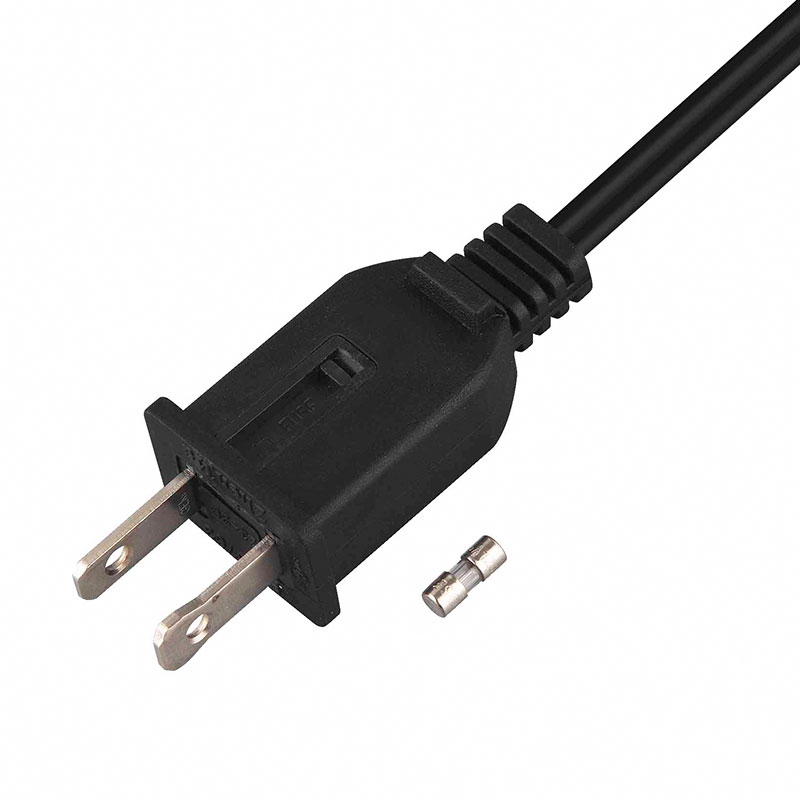
A polarized plug has one wide blade and one narrow blade. The wide blade is neutral, and the narrow blade is hot. On a lamp with a screw-shell socket, the shell should be connected to neutral, which is why polarity is not a cosmetic detail. Non-polarized plugs appear on double-insulated fixtures where either blade orientation is acceptable, but they are not a substitute for correct wiring.
Inline switches come in three common forms: rotary, push-through and rocker. A single-pole switch belongs on the hot conductor. With a polarized plug, that means switching the narrow-blade side, not the wide-blade side. The switch rating should exceed the fixture current, and the housing should have a strain relief that grips the jacket rather than the conductors.
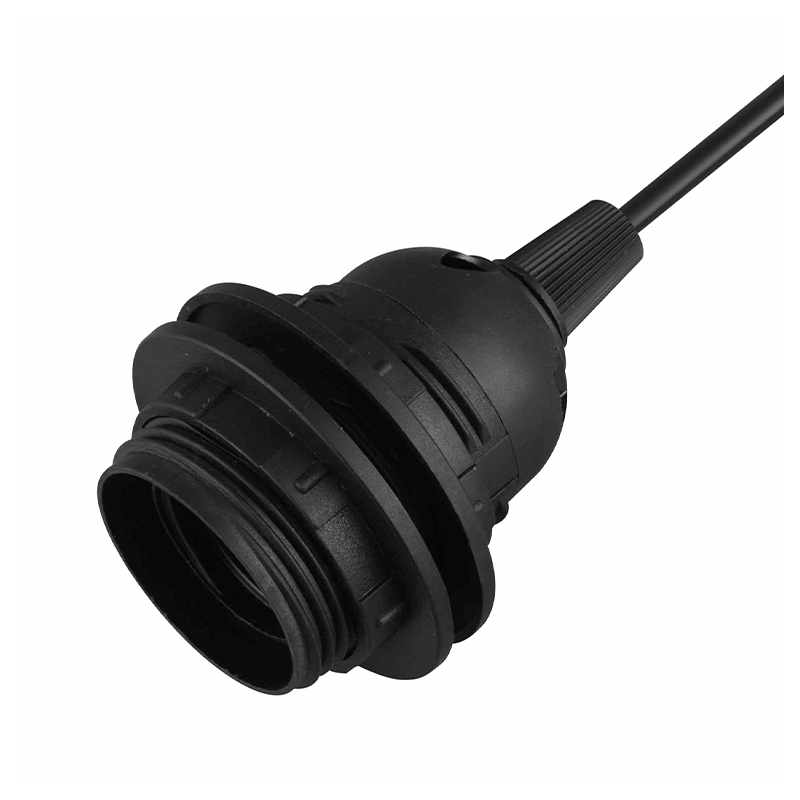
Molded strain relief outperforms a knot in a plastic shell. A right-angle or flat plug is worth specifying for lamps that sit close to a wall. For pendant and hanging fixtures, a kit with a molded E26 socket, a cord grip and a listed switch removes the assembly variables that cause returns.
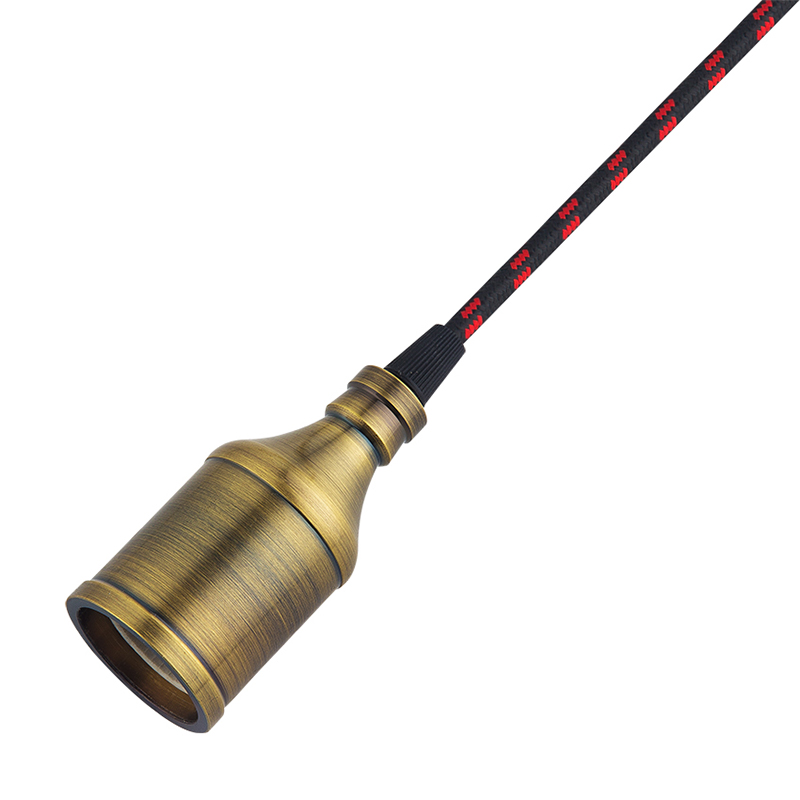 E26 Pendant Light Cord Kit with Toggle SwitchDIY pendant lamp kit with E26/E27 socket, toggle switch, hooks and US plug; customizable cable sizes, lengths and socket counts.View Product →
Outdoor, damp and wet locations: where ordinary lamp cord stops
Standard SPT-1 and SPT-2 cords are indoor products. Outdoors, the cord needs a jacket marked for wet locations, sunlight resistance and a connector that seals. Water does not need a hole to travel; it follows the cord, so a drip loop before the connection is part of the installation, not an accessory.
For LED deck lights, landscape fixtures and low-voltage garden lighting, the cord set is usually a 2-conductor 18 AWG waterproof extension with molded connectors. The electrical load is small, so voltage drop is less important than moisture ingress and UV degradation. Look for a jacket that stays flexible at low temperature, a connector body that covers the terminals, and a cap or boot that keeps water out when the connection is made.
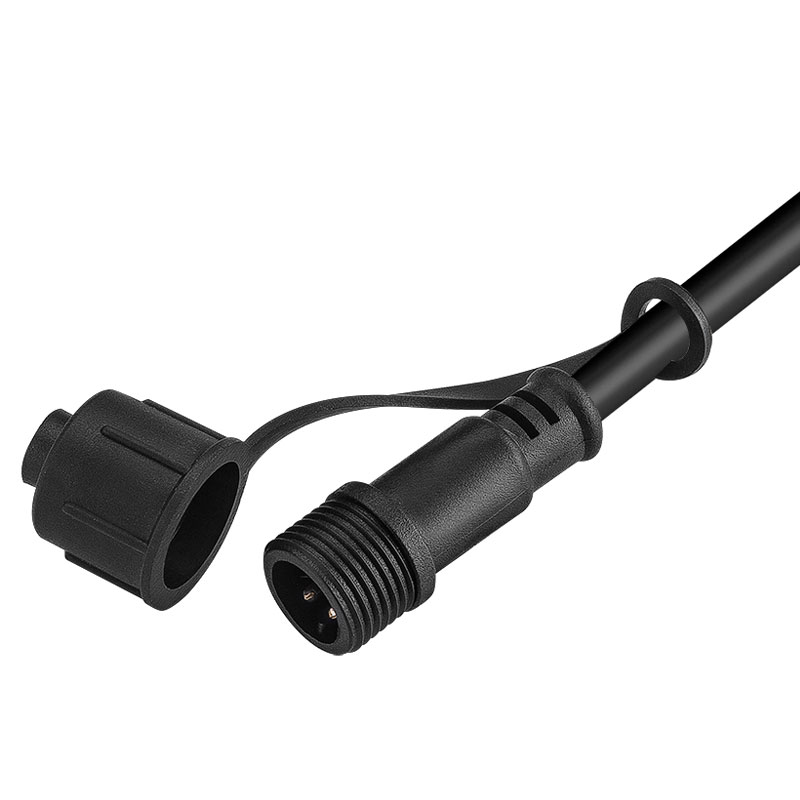 Waterproof 2-Pin Extension Cable for LED Deck LightsPack of five outdoor LED deck light extension cables in 18/16/14 AWG and 2/5/10 m lengths, with waterproof connectors for durable connections.View Product →
A sourcing checklist for lamp cords
When you buy lamp cord in volume, the differences that matter are rarely visible in a photo. They show up in the jacket marking, the copper, the plug dimensions and the test records.
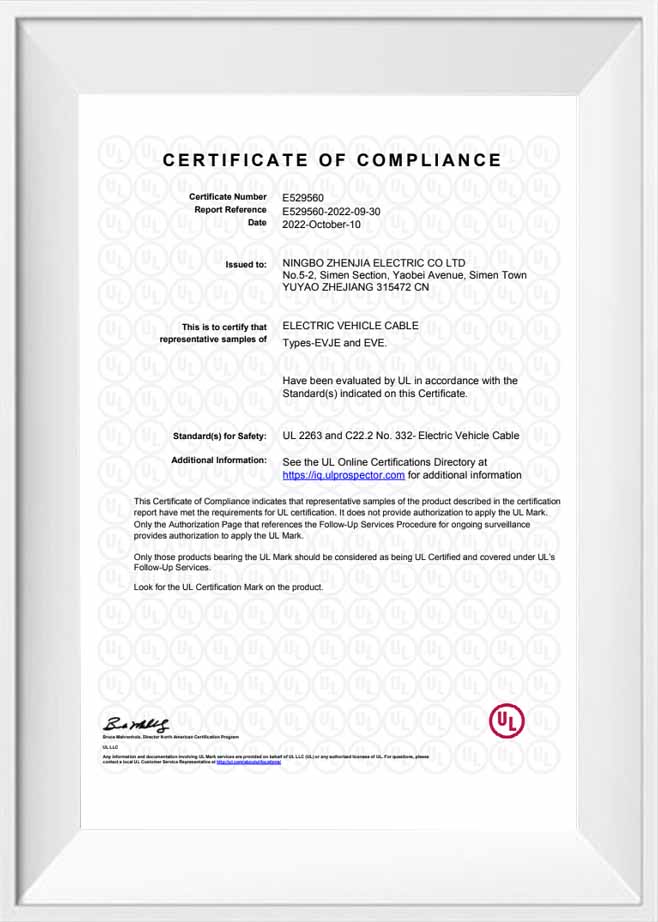
- Listing and marking: UL 817 for cord sets and UL 153 for portable luminaires in North America, c(UL)us for Canada, CE for Europe. The jacket should show AWG, voltage rating, temperature rating and the manufacturer's mark.
- Conductor: stranded copper for cords that flex. An 18 AWG SPT-1 conductor is commonly 41 strands of 0.16 mm; a 16 AWG SPT-2 is commonly 26 strands of 0.254 mm. Copper-clad aluminum saves cost but work-hardens and is a poor match for a cord that is handled.
- Plug: NEMA 1-15P or 5-15P blade dimensions, polarity, and a molded body that passes a pull test.
- Switch: current rating, endurance cycles and a boot that keeps moisture out if the lamp is used near a sink or outdoors.
- Jacket: PVC is standard; look for sunlight-resistant and cold-flex grades for outdoor products.
- Assembly: strain relief molded to the jacket, no exposed conductor strands, and a hipot test on every production lot.
- Tolerances: agree on finished length tolerance, jacket wall thickness and plug body dimensions before the first shipment. A 1/4 in length difference is harmless; a 0.2 mm blade difference is a rejected lot.
A sample that passes a visual check can still fail at the plug after 5,000 flex cycles. Ask for the test report, not just the certificate. For buyers sourcing US-style cords, the US power cord range is a useful reference point for plug and gauge combinations.
Measure, match, verify
The reliable way to buy a lamp cord is unglamorous. Measure the run, read the fixture nameplate, decide whether the cord will be fixed or handled, and check the environment before choosing the jacket. Then verify the listing and the jacket marking on the sample, not only on the datasheet. A cord that matches the load and the location is cheaper than a return, and far cheaper than a failed connection.
- [email protected]
- +(86)-0574-62162605
- +(86)-137 0584 5290
- No. 5-2, Yaobei Avenue, Simen Town, Yuyao City, Ningbo, Zhejiang Province, China
Copyright © NINGBO ZHENJIA ELECTRIC APPLIANCES CO.,LTD. All Rights Reserved. Custom Temporary String Light Manufacturers
